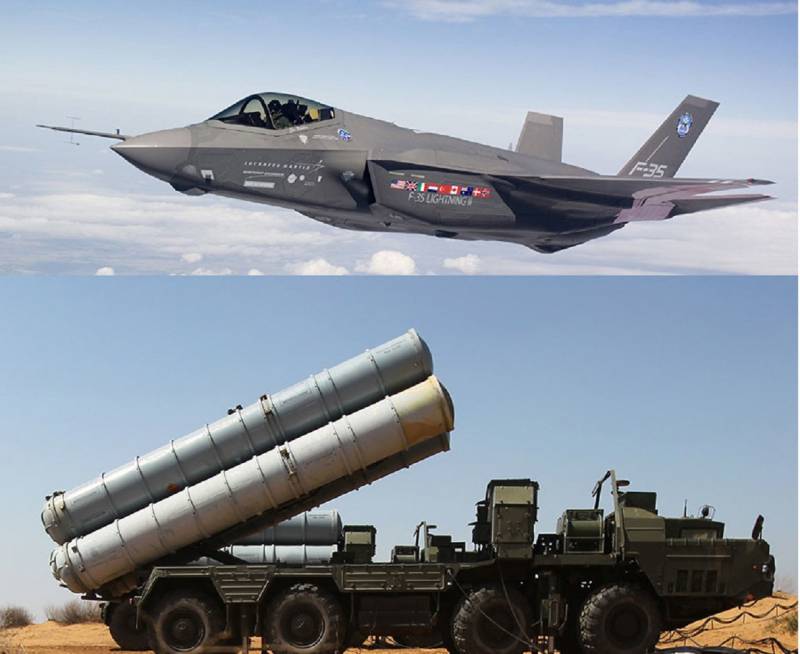
Turkey’s “S-400 vs F-35 Lightning II” conundrum, which has kept the F-35 stealth fighter from Ankara’s reach, may finally be coming to an end. The condition, however, is unchanged: the S-400 must go.
Tom Barrack, US ambassador to Turkey and a close aide to US President Donald Trump, stated that Turkey is closer to removing the Russian missile defense system that has created tensions with NATO allies and has become a hurdle to Turkey’s quest to obtain the American fifth-generation stealth fighter jet, Bloomberg reported.
In response to a question about whether Turkey is going to dump the Russian-origin S-400, asked at a conference in Abu Dhabi on December 5, Barrack said, “My belief is that those issues will be resolved in the next upcoming four to six months.”
The development comes as Turkey has been chasing a deal for the fifth-generation F-35 stealth aircraft since it was expelled from the program in 2019 for acquiring the S-400 AD system from Russia.
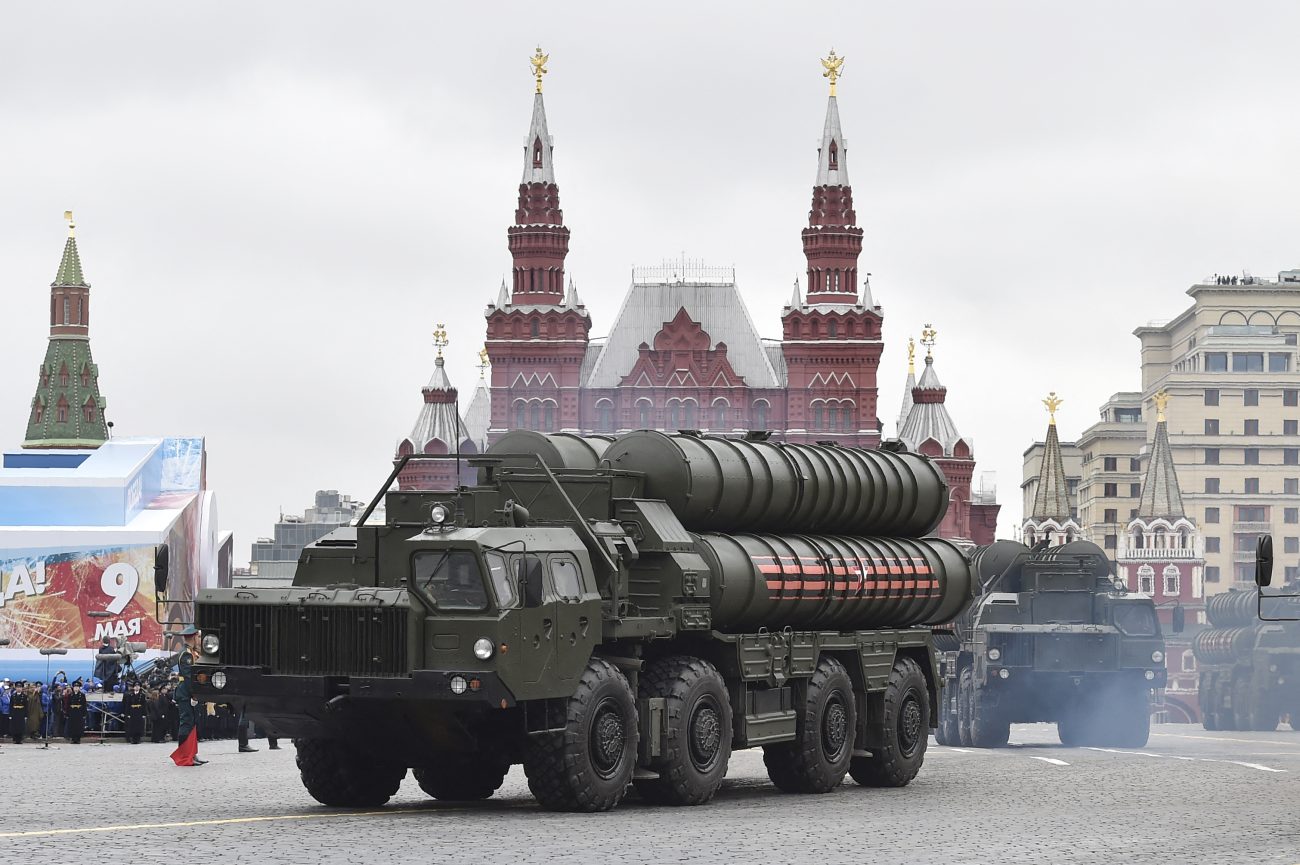
Turkey purchased four batteries of S-400 amid opposition from the US and NATO allies, over concerns that integrating the Russian-origin SAMs into the Turkish Armed Forces would jeopardise the F-35 stealth fighter program.
Turkey may have acquired the S-400 because it needed long-range air defense systems to plug a capability gap, particularly as equivalent NATO systems (such as Patriots and SAMP/T) were either delayed or denied.
However, it was sanctioned by the former Trump Administration under the CAATSA (Countering America’s Adversaries Through Sanctions Act) and expelled from the F-35 program shortly after accepting the first delivery.
Turkey never operationalised the S-400 despite paying a hefty price for it. It currently has the air defense system, radars, and missiles in storage. Analysts predict that Ankara has remained committed to the S-400, primarily to assert strategic independence from its NATO allies and to signal to them that it could diversify its defense partnerships.
At the same time, Turkey has refused to close the lid on the F-35 acquisition and has held several rounds of talks with officials from the Trump and Biden administrations to secure the Lockheed Martin-developed jets.
A March 2025 report in Fox News stated Trump would consider selling the F-35 to Ankara if the two sides could reach a consensus that renders the S-400 system inoperable. The US could either demand that the S-400 be disassembled or moved to a US base in Turkey, the report noted at the time.
During Turkish President Recep Tayyip Erdogan’s visit to the White House in September, Trump hinted that he would allow Turkey to buy the stealth aircraft, regarded as the most sophisticated in the world and referred to as the “quarterback” of the sky for their capability to coordinate strikes with drones and other aircraft.
Erdogan is “going to do something for us,” he stated at the time, hinting that Ankara could cut back on its purchases of Russian gas and oil.
As per Tom Barrack’s admission, all of that is already happening. And, since Trump returned to office in January, the two leaders’ “bromance” has strengthened ties between the two nations, the envoy added.
Turkish acquisition of F-35s may come as a bigger setback for Israel, which remains locked in a tense competition for influence with Ankara in Syria.
On its part, Israel fears that if Turkey were to establish a large-scale military presence in Syria, it could impede the Israeli Air Force’s freedom of action in the region. Turkey, on the other hand, has been vocal about its opposition to Israel’s actions in Gaza.
Last month, for instance, it issued arrest warrants for genocide against Israeli Prime Minister Benjamin Netanyahu and other Israeli officials.
A previous Reuters report stated that US officials and defense experts believe that the F-35 potentially sold to Saudi Arabia is less advanced than Israel’s F-35I Adir. Perhaps the same approach could potentially be used with Turkey.
Turkey has not officially confirmed if it will agree to dispose of the S-400, which has become a symbol of its strategic autonomy, independence, and prestige over the years.
S-400 vs F-35
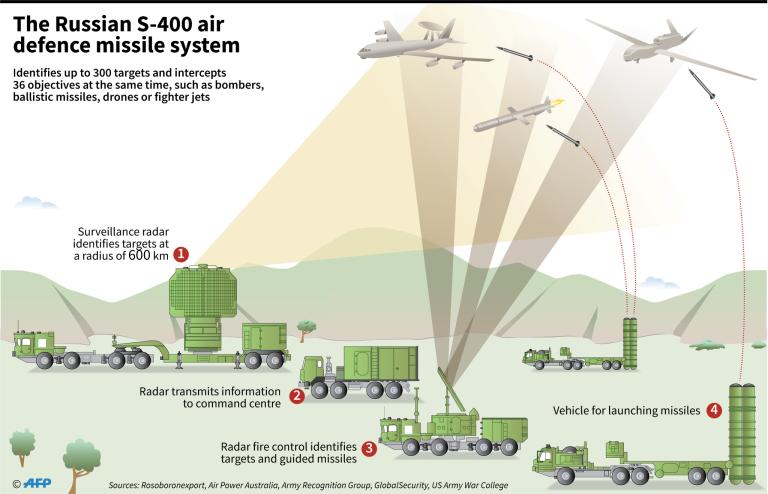
The S-400 is a defensive platform that denies an opponent air superiority; the F-35 is an offensive spearhead built to penetrate the most contested airspace and strike with impunity. They are opposites in purpose, yet both have now proven themselves in actual combat.
The F-35 saw combat in the recent Israel-Iran clash, where the Israel Defense Forces (IDF) launched multiple air strikes inside Iran without much resistance. Additionally, the F-35 was deployed to escort the B-2 bomber strikes on the Iranian nuclear facilities as part of ‘Operation Midnight Hammer’.
The US Air Force (USAF) recently disclosed that the F-35 conducted both suppression of enemy air defenses (SEAD) and provided cover for the strike force as it departed Iran.
Meanwhile, the S-400 recently proved its mettle in India against incoming projectiles from Pakistan during the brief conflict in May 2025. Impressed by the system’s capabilities, New Delhi is mulling the purchase of additional regiments of the S-400 systems.
– AFP / AFP / PATRICIO ARANA
Turkey has been steadily losing its air power edge to regional rivals like Greece and Israel. While Israel already operates the F-35I Adir (a customised variant of the aircraft), Greece has placed an order and is expected to receive the first batch starting in 2028.
Although Turkey is developing its own fifth-generation aircraft, KAAN, there is a sense in Turkey that it simply can not wait years for KAAN to become operational and needs a potent stopgap solution to maintain credible deterrence against adversaries.
Besides lobbying for the F-35, Turkey is acquiring 20 new European 4.5th-generation Eurofighter Typhoon, and several second-hand older variants from countries like Oman and Qatar. Additionally, it is upgrading its archaic F-16 fleet to increase the number of combat-ready jets in its inventory.
Moreover, a lot has changed since Turkey first took delivery of the S-400.
For one, it has pivoted to indigenous defense manufacturing and realised that the S-400 would not integrate with its other locally-produced systems. This may have prompted the exclusion of the Russian-origin AD from its aspirational ’Steel Dome’ air defense initiative.
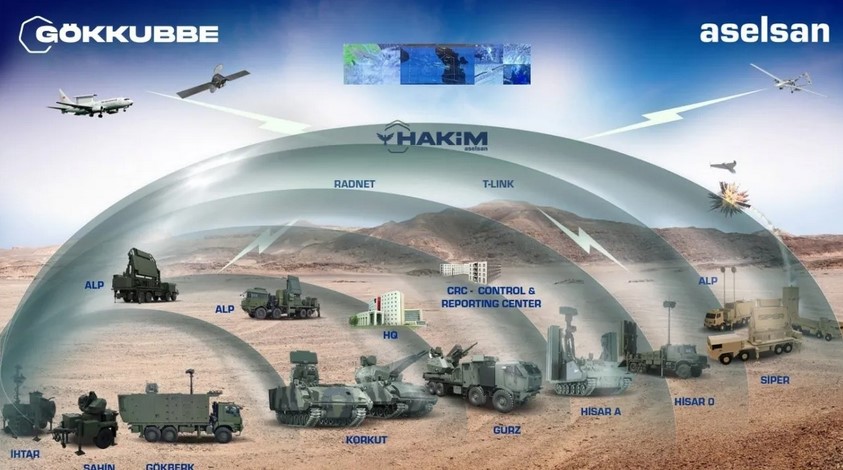
Defense analyst Sinan Elgin earlier told BBC Turkey, “For a system like Steel Dome to be successful, all systems and subsystems must be fully interconnected and able to exchange information in an integrated manner. But a system like the S-400, which is not local, could become an obstacle to this integrated network.”
As previously argued by Turkish media outlet the Nefes, the utility of the S-400 in Turkey is rapidly decreasing for three reasons: the S-400 cannot be integrated into the NATO umbrella, the shelf life of its interceptors has reduced, and the S-400s that are currently inactive and kept in storage at an unknown location would require maintenance, which is likely to attract further sanctions by US.
Earlier, a former Turkish Minister, Cavit Çağlar, suggested selling the system to a third country, but the contract’s end-user certificate prohibits resale to third parties without Russian consent. Yes, Ankara could sell back the S-400s to Russia, and Moscow could possibly forward them to India.
Leave a Reply