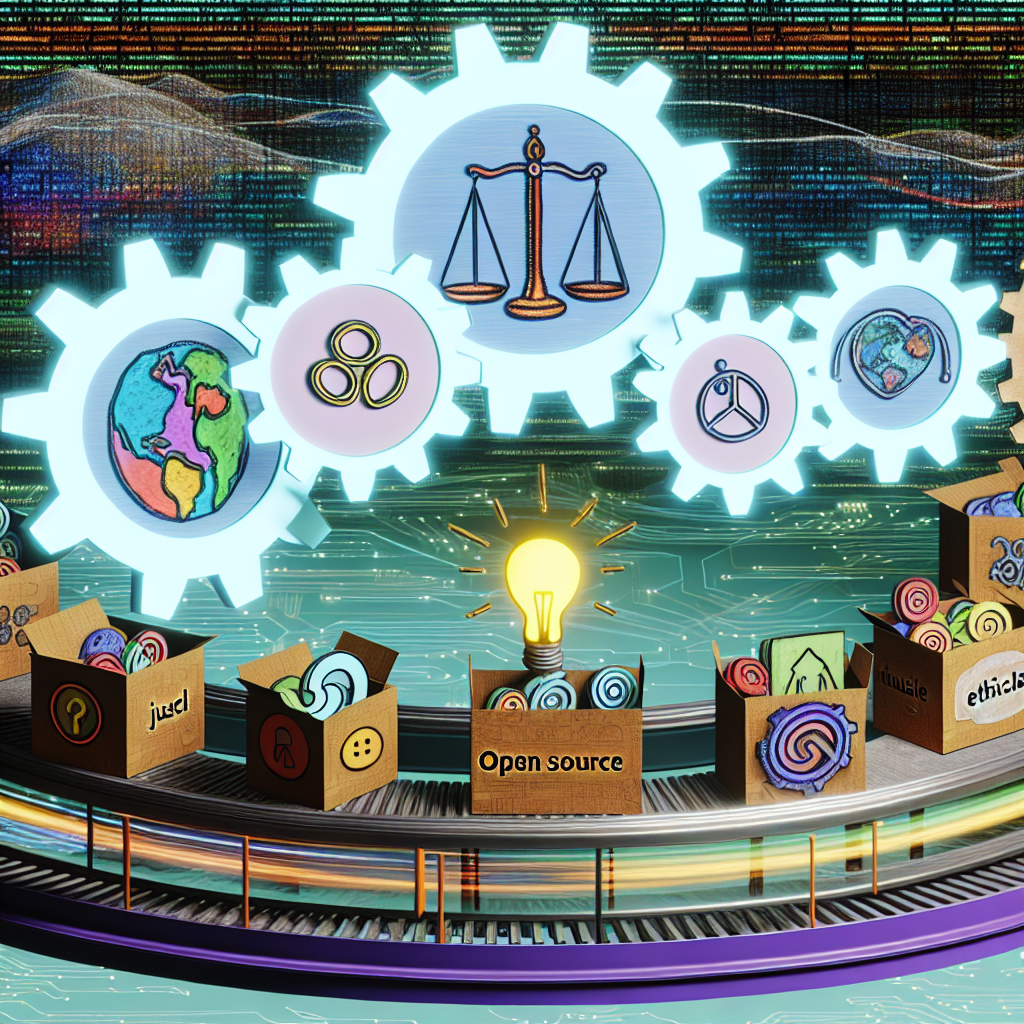
In the rapidly evolving field of artificial intelligence (AI), the discussion around ethical practices and inclusivity is becoming increasingly important. Open source AI models are emerging as pivotal elements in this discourse, providing opportunities for transparency, collaboration, and a more equitable technology development landscape.
The Essence of Open Source AI
Open source AI refers to AI models whose source code is made publicly available, allowing anyone to inspect, modify, and distribute the software. This practice contrasts with proprietary models, where access is restricted and often accompanied by licensing fees. Open source AI fosters a community-driven approach, enabling collaboration among developers, researchers, and organizations across the globe.
Promoting Ethics through Transparency
One primary advantage of open source AI models is their inherent transparency. When the source code is accessible, developers and users can examine how algorithms function, how data is processed, and what ethical considerations have been taken into account. This transparency helps in:
- Identifying and correcting biases in training data.
- Understanding decision-making processes in AI systems.
- Ensuring compliance with ethical standards and regulations.
Encouraging Community Collaboration
Open source communities often consist of diverse members from various backgrounds and expertise. This diversity drives innovation and creativity, leading to improved AI models that can better serve different demographics. Additionally, it encourages:
- Collective problem-solving and knowledge sharing.
- Cross-disciplinary approaches to developing solutions.
- Inclusion of voices and perspectives that are often marginalized in traditional tech development.
Case Studies of Successful Open Source AI Models
Several open source AI projects have set benchmarks for ethical and inclusive technology:
- TensorFlow: Developed by Google, this library has revolutionized machine learning by making it accessible to developers worldwide.
- PyTorch: An open-source machine learning library that has gained popularity among researchers for its flexibility and ease of use.
- Hugging Face Transformers: Provides pre-trained models for natural language processing (NLP) while encouraging fair and unbiased model training.
Challenges and Future Directions
While open source AI models are promising, challenges remain. Issues like maintaining quality control, ensuring sustainability, and navigating exploitation risks (“open washing”) can undermine the intentions behind open source initiatives. Therefore, the community must:
- Establish robust governance frameworks to maintain high standards.
- Encourage responsible contributions and usage.
- Continue advocating for ethical practices and inclusivity in AI development.
Conclusion
Open source AI models are more than just a technical resource; they are a pathway to creating a more ethical and inclusive technological future. By promoting transparency and collaboration, they hold the potential to democratize AI, making it beneficial for all sectors of society. As we navigate the complexities of AI development, open source principles can guide us toward ethical practices and ensure that technology serves the collective good.
Leave a Reply