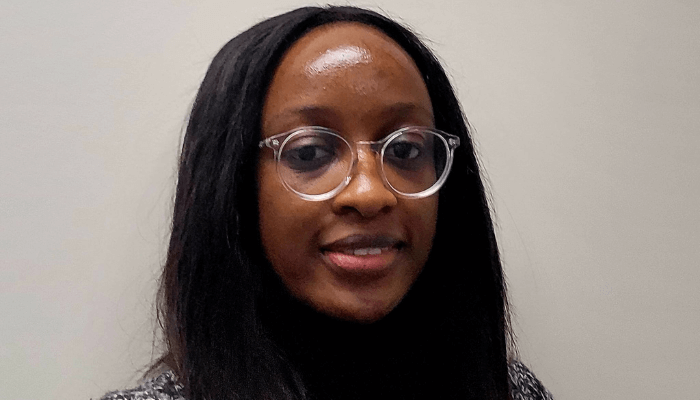
Biomedical innovation continues to redefine global healthcare, demanding a balance between technology and patient safety. In this interview, Abimbola Ayoola, Principal Quality Engineer at Medtronic, speaks with IFEOMA OKEKE-KORIEOCHA about her journey from Zoology to Biomedical Engineering, leadership in quality management, and driving innovation in medical technology.
Can you share your journey from studying Zoology to becoming a Principal Quality Engineer in Biomedical Engineering? What inspired this transition?
My journey into biomedical engineering started with a strong foundation in the life sciences. I come from a family of medical professionals, my dad is a medical doctor and my mum is a nurse, so I’ve always been surrounded by conversations about patient care and healthcare impact. Naturally, my initial plan was to study medicine or pharmacy, which led me to pursue a degree in Zoology as a premedical path.
However, along the way, I discovered biomedical engineering, and it completely shifted my perspective. I was fascinated by how the field blends engineering, science, and medicine , three areas I’ve always been passionate about. What really intrigued me was the realization that while many people focus on doctors and medicines, not many think about the medical devices that support diagnosis, treatment, and recovery. That realization sparked something in me.
After doing a lot of research, I knew that this was where I wanted to make my mark to help bridge that gap and contribute to healthcare through innovation, quality, and technology. That decision ultimately led me to pursue a master’s in biomedical engineering, where I developed a strong foundation in device design, biomaterials, and process validation.
Over the years, that passion evolved into a career focused on ensuring the quality, safety, and reliability of medical devices. Today, as a Principal Quality Engineer and a quality leader, I see my role as helping to ensure that every product leaving our facility not only meets technical standards but truly improves patient lives. For me, this journey represents a full circle from curiosity about medicine to actively shaping the systems and devices that make modern healthcare possible.
How do you think your background in Zoology and Biomedical engineering has influenced your approach to quality leadership?
My background in Zoology has had a tremendous influence on my approach to biomedical engineering and quality leadership. Studying Zoology gave me a strong foundation in biology and physiology, which are at the core of biomedical engineering. It helped me understand how living systems function and how animal physiology can inform experimental studies that are essential in preclinical and clinical testing. That early exposure to biological systems made it much easier to connect the dots between science, technology, and patient outcomes later in my career.
From a leadership perspective, my background has also shaped how I make decisions in quality. There’s always a human side to every engineering or quality decision behind every device or process, there’s a patient whose life may depend on it. That awareness drives how I lead my teams and approach quality.
I often remind myself that the patient who will use the device we’re developing could be my loved one, or someone else’s. That perspective gives deep meaning to what I do every day and reinforces why quality leadership isn’t just about compliance, it’s about care, responsibility, and impact.
Can you describe your leadership style and how you empower your team members to achieve their goals?
My leadership style is a blend of transformational and servant leadership. I describe it that way because I focus on empowering my team while aligning our collective goals with the broader mission of the organization.
As a transformational leader, I aim to inspire and motivate my team to see beyond their individual roles and connect their work to the bigger picture, the patients we serve. I encourage open communication, innovation, and accountability, and I make it a point to celebrate both small and big wins. This approach helps my team members grow in confidence, skill, and leadership.
The servant leadership side of my style is rooted in support and mentorship. I lead cross-functional teams that include engineers, microbiologists, and quality specialists, and I believe my role is to remove barriers and provide them with the tools, clarity, and resources they need to succeed. I also enjoy mentoring early-career professionals and helping them develop both technically and professionally.
What’s most rewarding to me is seeing how my team’s success translates directly into stronger quality performance and safer, more reliable products for patients. I’ve learned that when my team members feel empowered and valued, they bring their best selves to work and that ultimately drives operational excellence and advances the company’s mission.
For me, leadership isn’t about authority; it’s about building trust, developing people, and creating an environment where everyone can contribute meaningfully and grow.
What are some key lessons you’ve learned from leading multimillion-dollar product launches, and how do you apply those lessons to future projects?
One of the key lessons I’ve learned from leading multimillion-dollar product launches is the importance of understanding your stakeholders and aligning expectations early. Every successful launch begins with clarity knowing who your key stakeholders are, what success looks like for them, and ensuring consistent communication throughout the process.
Another valuable lesson is the need to document and reflect on lessons learned. I always maintain a Plus/Delta log capturing what worked well and what needs improvement. This continuous improvement mindset has been instrumental in driving efficiency and preventing repeat challenges across projects.
I’ve also learned the importance of cross-functional collaboration. Large-scale launches require strong alignment between engineering, quality, supply chain, manufacturing, and regulatory teams. Creating an environment where every team member feels ownership of the outcome ensures challenges are identified early and addressed effectively.
For instance, when we launched a $1 billion ablation device business at Medtronic, first in the Europe and later in USA both launches had different regulatory requirements and market dynamics. By leveraging insights from the first launch, including regulatory feedback, supply chain coordination, and cross-functional communication, we were able to streamline the European rollout and mitigate risks effectively.
These experiences have reinforced that successful project execution is built on stakeholder alignment, proactive reflection, strong collaboration, and adaptive problem-solving. Applying these lessons to future launches ensures we deliver safe, effective, and life-changing medical technologies while achieving organizational goals.
Can you walk us through your approach to ensuring the highest standards of safety, performance, and reliability in medical devices?
Quality engineering is critical in any industry, but it is especially important in the medical device field because human lives are directly impacted by every quality decision we make. My approach begins with strict adherence to regulatory standards, including ISO and FDA requirements, ensuring that all processes, documentation, and operations align with these standards.
A cornerstone of my work is risk analysis. I evaluate potential risks, identify mitigation strategies, and ensure device safety at every stage of development and manufacturing. For example, while manufacturing a neurological device, I worked closely with cross-functional teams including manufacturing, operations, and quality specialists to evaluate risks associated with device performance and patient safety. By proactively identifying potential failure points and implementing mitigation strategies, we were able to ensure that the final product met all safety, performance, and regulatory requirements before reaching patients.
Collaboration is essential. Ensuring that every department understands the quality requirements and their role in mitigating risk is key to preventing nonconforming products and maintaining consistent reliability.
Ultimately, my approach combines regulatory compliance, proactive risk management, and strong cross-functional collaboration to uphold the highest standards of quality and ensure patient safety.
How do you stay current with the latest developments and advancements in biomedical engineering and quality engineering?
I stay up to date by actively engaging with multiple sources, including scientific journals, industry news, and regulatory updates, to ensure I’m aware of evolving standards and best practices. I also monitor innovations from other companies, review new patents, and track emerging technologies to understand how the field is advancing.
In addition, I focus on several key areas shaping biomedical and quality engineering today:
Digital health and connected devices, including remote monitoring and real-time patient data analytics.
Artificial intelligence and machine learning applications in device performance, predictive maintenance, and clinical decision support.
Advanced manufacturing technologies, such as additive manufacturing (3D printing) for implants and devices.
Regulatory evolution, including updates to ISO standards, FDA guidance, and global harmonization efforts.
Sustainability and lifecycle management, ensuring devices are safe, efficient, and environmentally responsible.
By combining this continuous learning with participation in conferences, webinars, and professional networks, I ensure that my knowledge stays current and that I can apply these advancements to improve product quality, compliance, and patient outcomes.
You’ve mentioned that problem-solving is central to engineering in the medical device industry. Can you describe the complex challenges you’ve encountered in your career and how you approached resolving?
In the medical device industry, every problem has its own unique characteristics whether it’s a supplier escape, a product hold, a field corrective action, or responding to an audit. Engineering in this space is fundamentally about problem-solving, and it requires a structured approach using quality tools and data-driven methods.
One of the most complex challenges I faced was pivoting into engineering within the corporate U.S. environment, which required me to unlearn and relearn how engineering technologies and processes operate at a corporate scale. During this period, I also managed responses to regulatory observations, including both FDA 483 and TUV audits. Each observation required thorough root cause analysis, corrective and preventive action planning, and close collaboration with cross-functional teams to ensure compliance and prevent recurrence.
To address these challenges, I relied on mentorship, continuous learning, and structured problem-solving tools from my quality engineering background. By combining technical rigor with proactive communication and collaboration, I successfully resolved the regulatory observations, ensured compliance, and continued to contribute to high-impact projects.
This experience reinforced a key lesson: complex problems require both adaptability and technical excellence, and the ability to continuously learn and apply quality tools is essential to delivering safe, reliable medical devices.
You’re passionate about education and mentorship. Can you tell us about your experiences in these areas and how you think they can benefit the next generation of innovators?
Mentorship is extremely valuable to me because I am a product of mentorship. It’s played a key role in the rapid growth of my career and in gaining broad exposure across the medical device industry. Beyond traditional education in a university setting, I’ve learned that education also comes from learning from cross-functional teams, reading, and participating in professional development courses. These experiences have not only helped me grow personally and professionally but also allowed me to contribute meaningful value to the organizations I work with recognition I’ve been fortunate to receive from senior leadership.
I believe mentorship and education are equally critical for the next generation of innovators. Mentorship acts as a shortcut to success, allowing young professionals to learn from those who have walked the path before them. It provides guidance, perspective, and clarity at every stage of one’s career, helping mentees avoid pitfalls and make more informed decisions.
Education, in all its forms, is essential because knowledge fuels growth. The more you learn, the more equipped you are to innovate, solve problems, and contribute to meaningful advancements in your field. By combining mentorship with ongoing education, we can empower the next generation to become confident, capable, and visionary leaders who will drive the future of biomedical engineering and healthcare innovation
What advice would you give to young professionals looking to pursue a career in biomedical engineering or quality engineering?
My advice to young professionals looking to pursue a career in biomedical or quality engineering starts with knowing your ‘why’ the reason you chose this path. Understanding your purpose will keep you motivated, especially because behind every process or device is a patient whose life depends on the quality of your work. Keeping that perspective gives your work meaning and inspires you to go the extra mile.
I’d also emphasize the importance of soft skills like communication, teamwork, and leadership. The ability to collaborate effectively and explain complex ideas clearly is critical, particularly in cross-functional environments.
Mentorship is another key factor. Having a mentor who has walked the path before you can provide guidance, perspective, and constructive feedback. Don’t let the idea of critique discourage you; as I always say, feedback is a blessing, and no one has all the answers.
Continuous learning is essential. Biomedical technology evolves constantly, and the most successful engineers stay open to change whether through cross-functional projects, new technologies, or professional certifications.
At the end of the day, biomedical and quality engineering are about more than compliance. They’re about building trust, improving lives, putting patients first, and ensuring every product that reaches a patient does exactly what it’s designed to do. Approaching your career with purpose, curiosity, and openness will set you on a path to make a meaningful impact.
What do you think are some of the most pressing challenges facing the medical technology industry today, and how do you see your work contributing to addressing these challenges?
One of the most pressing challenges facing the medical technology industry today is balancing innovation with compliance. As new technologies like AI-driven devices, connected health systems, and personalized medicine advance rapidly, ensuring they remain safe, reliable, and compliant with evolving global regulations is a major task.
Another significant challenge is maintaining consistent product quality across global supply chains. With components and manufacturing happening across multiple regions, it takes strong quality systems, close supplier collaboration, and data-driven oversight to ensure that every product meets the same high standard, whether it’s in North America, Europe, or Africa.
There is also a growing need for sustainability, cost-efficiency, and accessibility in manufacturing and producing devices that are not only safe and effective but also responsible, efficient, and affordable so that more patients can benefit from them.
In my role as a Principal Quality Engineer and leader, I contribute directly to addressing these challenges by leading cross-functional teams to strengthen quality systems, drive process improvements, and ensure product reliability throughout the manufacturing lifecycle. We focus on proactive problem-solving using data analytics, root cause analysis, process validation, and corrective and preventive actions to prevent issues before they reach patients.
At the same time, I invest in mentoring and developing my teams, because sustainable quality depends on people who understand the “why” behind what they do. By building a culture of accountability and continuous improvement, I believe we can not only meet regulatory expectations but also advance innovation safely and responsibly, ultimately improving patient outcomes worldwide.
How do you see the field of biomedical engineering evolving in the next 5-10 years, and what opportunities or challenges do you think this will present?
Over the next five to ten years, biomedical engineering is poised for rapid evolution, driven not only by artificial intelligence, automation, and advanced data analytics which will be applied to areas such as personalized medicine, wearable and implantable devices, regenerative medicine, and advanced biomaterials. AI is transforming how we design, test, and monitor devices, creating opportunities for predictive, adaptive, and patient-centered technologies. Devices will increasingly learn from real-time patient data to optimize outcomes, improve diagnostics, and support more personalized treatment plans.
The opportunities are immense: digital health integration, telemedicine-enabled devices, and connected ecosystems will allow better patient monitoring and proactive interventions. Additive manufacturing (3D printing) and biofabrication will expand customization and accessibility of implants and devices. The field is also seeing growth in sustainable and cost-efficient manufacturing, ensuring that innovative healthcare solutions are widely accessible.
At the same time, these advancements bring significant challenges. Ensuring data integrity, cybersecurity, and privacy will be critical as devices become connected and collect sensitive health information. Regulatory frameworks must evolve to keep pace with fast-changing technologies. Validation and risk management for AI-driven and adaptive devices will require new approaches, while global supply chain consistency and quality assurance remain ongoing concerns.
From my perspective as a quality and engineering leader, my role is to bridge innovation with assurance. I focus on implementing robust quality systems, ethical standards, and proactive risk management, ensuring that these innovative technologies are safe, reliable, and effective for patients. I also invest in mentoring teams and fostering cross-functional collaboration, because the next generation of biomedical engineers will be critical to driving these advancements responsibly.
In summary, the next decade will be defined by technological innovation, patient-centered design, and integrated healthcare solutions and it will require engineers and leaders to balance speed of innovation with quality, safety, and compliance to truly improve patient outcomes worldwide.
How can your experience in quality and biomedical engineering be applied to other manufacturing industries, particularly in a growing economy?
My experience in quality engineering and biomedical manufacturing is highly transferable to other industries and growing economies like Nigeria. At Medtronic, I’ve led cross-functional teams to implement robust quality systems, process improvements, and regulatory compliance frameworks for highly complex and life-critical products. These principles strong process controls, risk management, continuous improvement, and data-driven decision-making are essential in any manufacturing environment.
In a growing economy. where industries are scaling rapidly, my experience can help establish or strengthen quality systems, standardize operational processes, and implement best practices that improve product reliability, efficiency, and safety. For example, introducing structured risk analysis, supplier quality management, and process validation can significantly reduce defects and enhance overall performance, whether in medical devices, pharmaceuticals, or consumer goods.
Additionally, my experience in mentoring and developing cross-functional teams can help build local talent and leadership capacity. By transferring knowledge and fostering a culture of accountability, innovation, and continuous learning, I believe we can accelerate industrial growth while maintaining high standards of quality and operational excellence, ultimately benefiting both businesses and the communities they serve.

[ad_2]
Source link
Leave a Reply