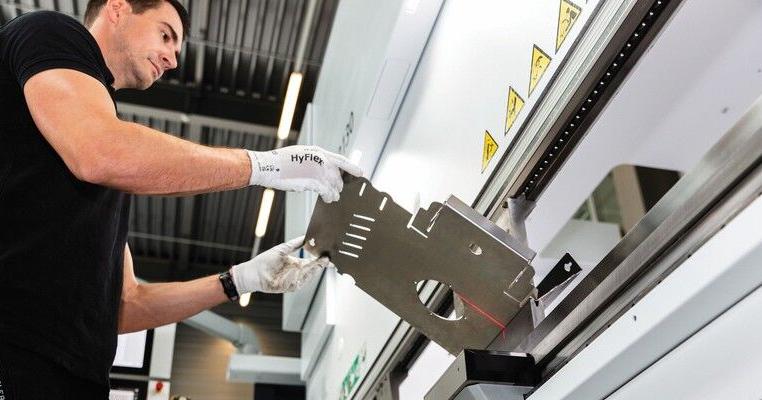
It was an eventful Fall for the manufacturing world. Literally. From September to early November, the SME Media team traveled to and from FABTECH (Chicago), CMTS (Toronto), three regional Manufacturing Technology Series events (California, South Carolina and Texas), as well as various open houses, tech showcases and other industry meetups.
In addition to networking with a multitude of industry experts and exchanging insights, we also scoured show floors, panel sessions, workshops, knowledge bars and smart zones to find the latest innovations, equipment and processes that impact manufacturers of all sizes. With a focus on automation, myriad new products promise to enhance performance, improve efficiency and cut costs.
The following are a small sampling of the standout products that caught our eye—and you can be sure we’ll be on the lookout for more in 2026.
1. Next-Gen Multitasking Machine

Mazak Corp.’s latest multitasking machine, the INTEGREX i350S NEO, integrates turning, milling and, for the first time, grinding. Building on the company’s “Done-in-One” concept, the versatile INTEGREX platform provides increased thermal stability and advanced automation features, according to the company.
By adding grinding capabilities, Mazak says manufacturers can complete complex parts with exceptional surface finishes and tighter tolerances in a single machine. The integrated system reduces setup times and eliminates secondary operations while delivering “unprecedented” precision, efficiency and part quality, the company adds.
The system consists of a main and a second turning spindle, as well as a milling spindle headstock. The main spindle accommodates a 10” (254 mm) chuck and provides a Y-axis stroke of 12” (305 mm) and an X-axis stroke of 27” (686 mm) for a maximum part diameter capacity of 26.38” (670 mm).
The INTEGREX i-350S incorporates the latest Mazak MAZATROL SmoothAi CNC control technology. For fully optimized machining operations, the AI-powered technologies are said to enable fast and easy programming, as well as controlled spindle speed for reduced vibration and greater machine thermal stability.
Mazak introduced the new NEO Series unit in early October at its DISCOVER event in Florence, Ky.
2. Tough 3D Materials in Stereolithography
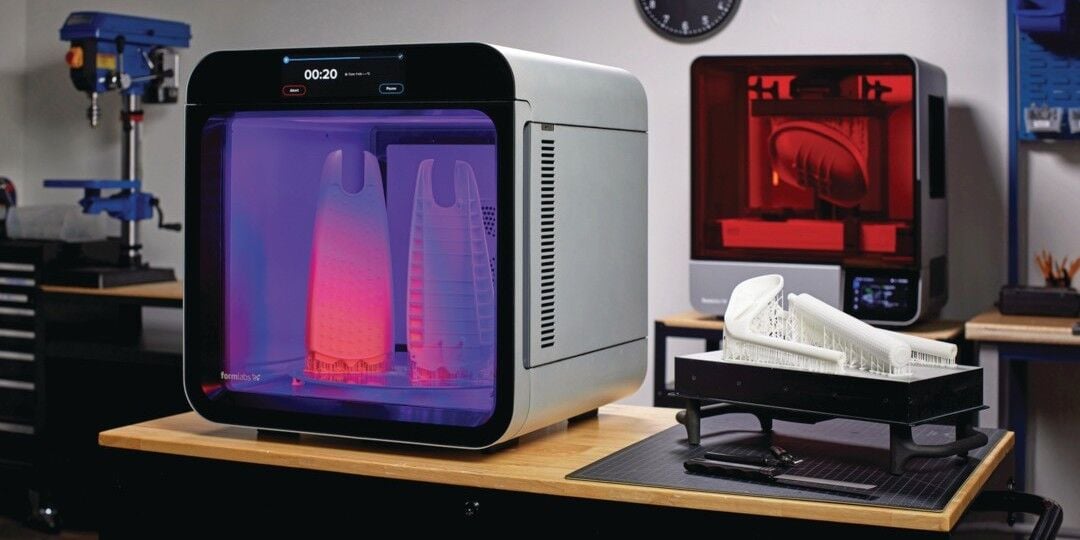
Stereolithography equipment
Formlabs Inc. says its two new stereolithography (SLA) materials will bring 3D printing “significantly closer” to end-use part production with characteristics similar to those of traditional thermoplastic parts. The Tough 1000 and 2000 resins join Tough 1500 in the company’s new Tough Resin Family, which is designed to stand up to harsh environments, impact and heavy-duty wear, according to the company.
Intended to rival high-density polyethylene, the 1000 variant is said to be the toughest and most ductile material of the new Formlabs offerings. Tough 2000 is described as strongest and stiffest as an alternative to ABS (acrylonitrile butadiene styrene), while the 1500 resin targets polypropylene as a balanced blend of stiffness and compliance.
“Formlabs’ goal has always been to deliver any part at the push of a button,” Formlabs co-founder and CEO Max Lobovsky said in a press statement. “But that mission depends on more than just speed and ease. We need parts that are as tough and resilient as the products we rely on every day. With the new Tough Resin Family, SLA printing now delivers the strength and durability of the world’s most trusted thermoplastics.”
3. Versatile Waterjet System

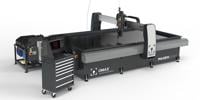
Hypertherm Inc. demonstrated its new OMAX MAXIEM X Series JetMachining Centers at FABTECH 2025 in Chicago. The versatile waterjet system can cut complex parts out of most materials, including metal, plastic, glass, ceramic, stone and composites, the company says, while generating surface finishes that often eliminate the need for secondary machining.
Boasting superior performance and productivity, the MAXIEM is engineered for shops that require intelligent performance. Enhancements include the latest version of IntelliMAX, the OMAX premium software suite, including the IntelliVISOR mobile app that enables remote live cut monitoring, systems status and problem alerts, remote pause and instant notifications from anywhere.
A patent-pending hopper contains abrasive material to avoid external spillage. The 7-pound capacity provides advanced incoming abrasive filtering and is compatible with an optional clog detection system that automatically pauses the machine if necessary. Meanwhile, new tank rub rails reduces the risk of rust while preventing damage to the catcher tank and the workpiece during loading and unloading, according to Hypertherm.
A modular design allows users to customize their machine with a wide range of accessories to meet specific needs. This includes under-bridge lighting for improved visibility on the cutting table.
4. Expanded Shoulder Milling Line
Sandvik Coromant expanded its CoroMill MS20 shoulder milling line to include grade GC1230 for ISO P steel applications. Already proven in ISO M and ISO S materials, the new grade extends the tool’s scope to a wider range of machining tasks in the general engineering and automotive industries. Insert geometries are available for steel, stainless steel and HRSAs.
The CoroMill MS20 is designed for true 90° shoulder milling and supports both roughing and finishing operations, including face milling, linear and helical ramping, slotting and plunging. The cutter bodies provide tight axial and radial runout tolerances, helping to maintain wall quality and surface finish while reducing the risk of scrap, according to the company.
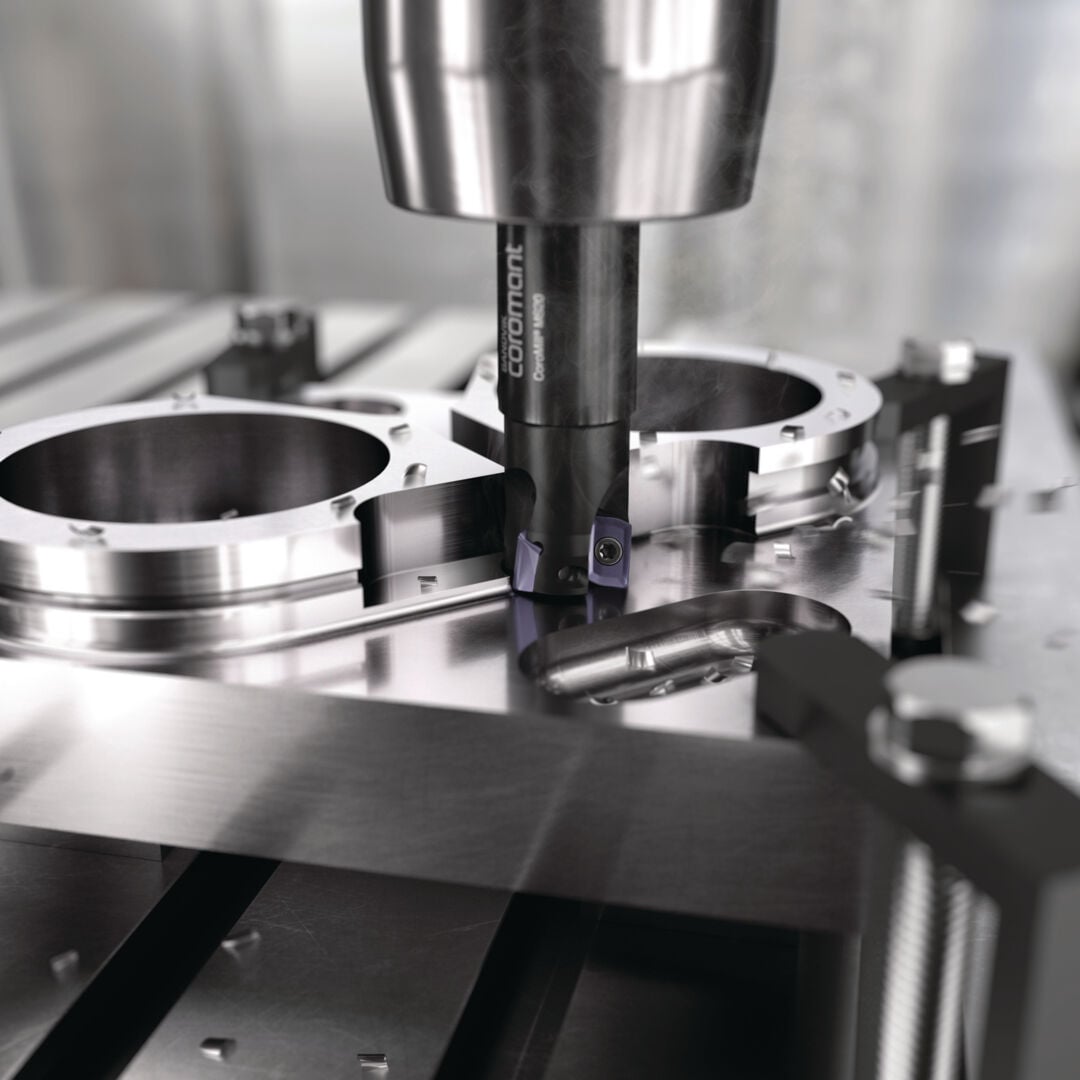
The GC1230 grade incorporates advanced substrate and coating technologies to improve wear resistance and edge security, which Sandvik says provides consistent tool life and predictable performance under demanding cutting conditions. Inserts are produced with precision pressing technology for dimensional accuracy and extended insert life, the company adds, and the insert’s wear pattern is gradual and reliable for fewer unexpected tool changes and increased productivity.
5. Fully Automatic Bending Cell

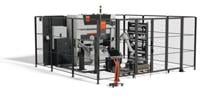
Bystronic Inc. says its ByCell Bend Star M delivers precise bending in a compact footprint (6.5 x 6.2 m) while delivering fast cycle times. The company debuted the system at FABTECH 2025 in September. The fully automatic midsize bending cell was demonstrated with a ByBend Start 120 press brake, boasting bending speeds up to 0.98 inches/second. And a new vision system eliminates the need for referencing, which Bystronic says saves 10-15 seconds per part.
Featuring enhanced part detection, the ByCell Bend Star automatically recognizes if the right parts are in the cell, if the stacks have shifted and when the stack is empty, according to the company. And the system can automatically separate sheets with a brush or magnet (depending on the material). The double-sheet detection notifies users when multiple sheets are picked up, limiting the chance of errors and issues while bending and intelligently maintaining peak bending speed.
An advanced mechanical crowning system uses pivot points and beams to react to variations in material, enabling precise bending throughout the length of the part—without hydraulic or electronic components. Meanwhile, the Laser Angle Measuring System features spring-back compensation and angle measurements to optimize bends, especially with higher-tensile-strength materials.
6. Drone-Powered Autonomous Inventory-Management System


Corvus Robotics Inc., a provider of autonomous inventory-management systems, launched an updated version of its Corvus One system that it claims is the first drone-powered system capable of operating in a lights-out distribution center without requiring reflectors, stickers, beacons or other infrastructure aids.
Using computer vision and generative AI to understand its environment, the fully autonomous Corvus One can operate in either very narrow aisles or wide aisles. With obstacle detection at its core, the company says the lightweight drone flies at walking speed without disrupting workflow or blocking aisles—and can preventatively ascend to avoid collisions with people, forklifts or robots, if necessary. An advanced scanning system can read “any barcode symbology in any orientation placed anywhere on the front of cartons or pallets.”
The system is designed to maximize space utilization, avoid stockouts and improve KPIs with smarter replenishment and more accurate physical inventory counts. Corvus says the next-gen drones ensure 99.9% inventory accuracy, can free up to 10% total pallet-racking space, and reduce shrinkage and material-handling equipment costs.
7. Redesigned Press Brakes

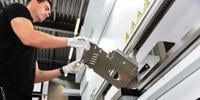
Trumpf Inc. introduced a completely redesigned version of its TruBend 3000 bending machine series for North America at FABTECH 2025 in September. In addition to being fast and precise, Trumpf says the new press brakes cut energy consumption and are easy to program, thanks to various technologies that debuted on the larger TruBend 5000 machine series.
Trumpf says it has cut throughput time by around 40% compared to the previous 3000 series machines. Depending on the machine type, the new TruBend 3000 will offer a press force ranging from 93 to 253.5 tons and a bending length of 6.5 to 13 feet (1.98 to 3.96 m).
To ensure high part quality, the 3000 press brake integrates Trumpf’s proven ACB Laser automatic angle-measuring system that includes a camera and laser sensors to measure a component’s bending angle before each process. If the angle doesn’t match the value stored in the software, the press beam automatically changes its position until the desired angle is achieved. This also reduces scrap, which in turn lowers costs.
Trumpf plans to add a production line at its Farmington, Conn., facility to begin making TruBend 3000 machines in mid-2026. The company says the line will employ innovative capabilities of its new 55,800-sq-ft (5,184-sq-m) Smart Factory to use Trumpf machines to produce sheet metal parts for the new series of press brakes.
8. Cast-Iron Face-Milling Cutters

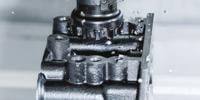
Ceratizit Group says its new MaxiMill – S-Power face-milling cutters are designed specifically for cast-iron applications. Featuring 12 insert pockets at 63 mm and double-sided indexable inserts, the cutters can handle the tool wear, burr formation and breakout challenges typical in cast-iron machining, according to the company. In addition, the face mill includes a double-wedge clamp to ensure the indexable inserts are easy to use and securely attached.
“Cast-iron machining challenges force many shops to settle for low feed rates,” says Eric Gerringer, Ceratizit USA’s technical director. “With an optimal number of cutting edges, the MaxiMill – S-Power allows for higher feed rates while also improving surface quality and reducing burr formation.”
The double-sided indexable inserts boast eight cutting edges and are made from premium substrates, with Dragonskin coating for high performance and smooth cutting action, Ceratizit says. Robust insert seats together with the double-wedge clamps provide secure insert retention along with low axial and radial run-out.
The wedges are fitted with anti-twist protection, and for optimal clamping, there are separate clamping wedges for each holder diameter. Furthermore, the double-sided wedge clamping makes it easy to quickly and accurately change inserts, as there is a single screw for each double wedge.
“Our automotive and heavy-industrial customers will benefit from the higher performance of the MaxiMill – S-Power,” Gerringer says. “Braking systems, engine blocks, pump housings and machine tool beds are only a few examples of cast-iron components that this face mill will machine efficiently.”
9. Verifiable Digital Measurements
Verisurf Software Inc. released the latest version of its model-based metrology platform Verisurf 2026, which boasts several new features and workflow improvements to help manufacturers reduce costs, save time and enhance repeatable process control across all stages of digital manufacturing, according to the company. Noting that measurement and inspection have become vital parts of a fully connected production process—not just end-of-line tasks—Verisurf says the 2026 enhancements strengthen this integration by offering faster, more accurate and more reliable methods to handle inspection data, verify parts and assemblies, and connect design intent with the final product.
“Verisurf 2026 is built on direct feedback from our customers, who need more than measurement tools; they need a way to connect quality data with every stage of the manufacturing process,” says President and CEO Ernie Husted. “By embedding metrology into the digital workflow, manufacturers gain not only faster inspection but also greater visibility, repeatability and control of their entire production process.”
Verisurf 2026 features updates to key modules, including CAD with Model-Based Definition. It also expands device compatibility and strengthens interoperability across a wide range of coordinate measuring machines, scanners and software. Such flexibility helps unify a manufacturer’s measurement, inspection and reporting processes under a single digital framework, the company notes.

Leave a Reply