NEW DELHI, Dec 5 (Reuters) – India’s government is reviewing a telecom industry proposal to force smartphone firms to enable satellite location tracking that is always activated for better surveillance, a move opposed by Apple, Google and Samsung due to privacy concerns, according to documents, emails and five sources.
Sign up here.
For years, the Modi administration has been concerned its agencies do not get precise locations when legal requests are made to telecom firms during investigations. Under the current system, the firms are limited to using cellular tower data that can only provide an estimated area location, which can be off by several meters.
A measure to track device-level location has no precedent anywhere else in the world, lobbying group India Cellular & Electronics Association (ICEA), which represents both Apple and Google, wrote in a confidential July letter to the government, which was viewed by Reuters.
“The A-GPS network service … (is) not deployed or supported for location surveillance,” said the letter, which added that the measure “would be a regulatory overreach.”
‘DEDICATED SURVEILLANCE DEVICE’
India’s home ministry had scheduled a meeting of top smartphone industry executives to discuss the matter on Friday but it was postponed, a source with direct knowledge of the matter said. On Thursday, Reuters sent questions related to this topic to the ministry.
India’s IT and home ministries, which are both analysing the telecom industry’s proposal, did not respond to Reuters queries.
Apple, Samsung, Google, Reliance and Airtel did not respond to requests for comment. Lobby groups ICEA and COAI also did not respond.
At this point, no policy decision has been made by the IT or home ministries.
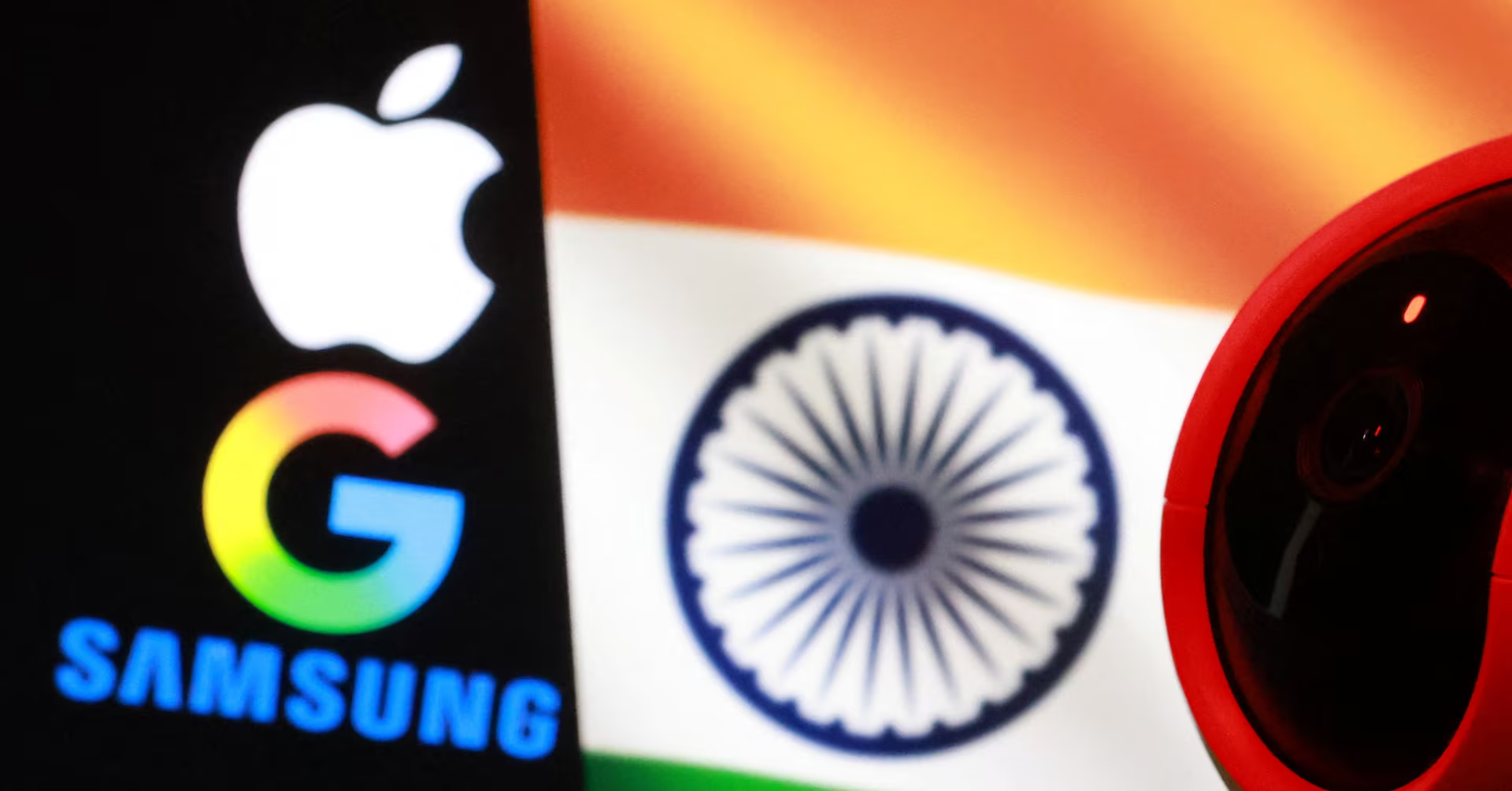
Item 1 of 2 The Indian flag, Apple, Google, Samsung logos and a surveillance camera are seen in this illustration taken December 4, 2025. REUTERS/Dado Ruvic/Illustration
Taking advantage of A-GPS technology – which is typically only turned on when certain apps are running or when emergency calls are being made – could provide authorities with location data precise enough that a user can be tracked to within about a meter, according to technology experts.
“This proposal would see phones operate as a dedicated surveillance device,” said Junade Ali, a digital forensics expert associated with Britain’s Institution of Engineering and Technology.
Cooper Quintin, a security researcher at the U.S.-based Electronic Frontier Foundation, said he had not heard of any such proposal elsewhere, calling it “pretty horrifying.”
TELCOS VS SMARTPHONE FIRMS
India is the world’s second-biggest mobile market with 735 million smartphones as of mid-2025, where Google’s Android powers more than 95% of the devices, with the rest using Apple’s iOS, Counterpoint Research says.
Apple and Google’s lobby group, the ICEA, argued in their July letter that there are significant “legal, privacy, and national security concerns” with the proposal from the telecom group.
It warned their user base would include people from the military, judges, corporate executives and journalists, adding that proposed location tracking risked their security given that they hold sensitive information.
Even the old way of location tracking is becoming problematic, the telecom group said, as smartphone makers show a pop-up message to users, alerting them that their “carrier is trying to access your location.”
“A target can easily ascertain that he is being tracked by security agencies,” said the telecom group, urging the government to order phone makers to disable the pop-up features.
Privacy concerns should take priority and India should also not consider disabling the pop-ups, Apple and Google’s group argued in its July letter to the government.
This will “ensure transparency and user control over their location.”
Reporting by Aditya Kalra and Munsif Vengattil; Editing by Thomas Derpinghaus
Our Standards: The Thomson Reuters Trust Principles.


Leave a Reply