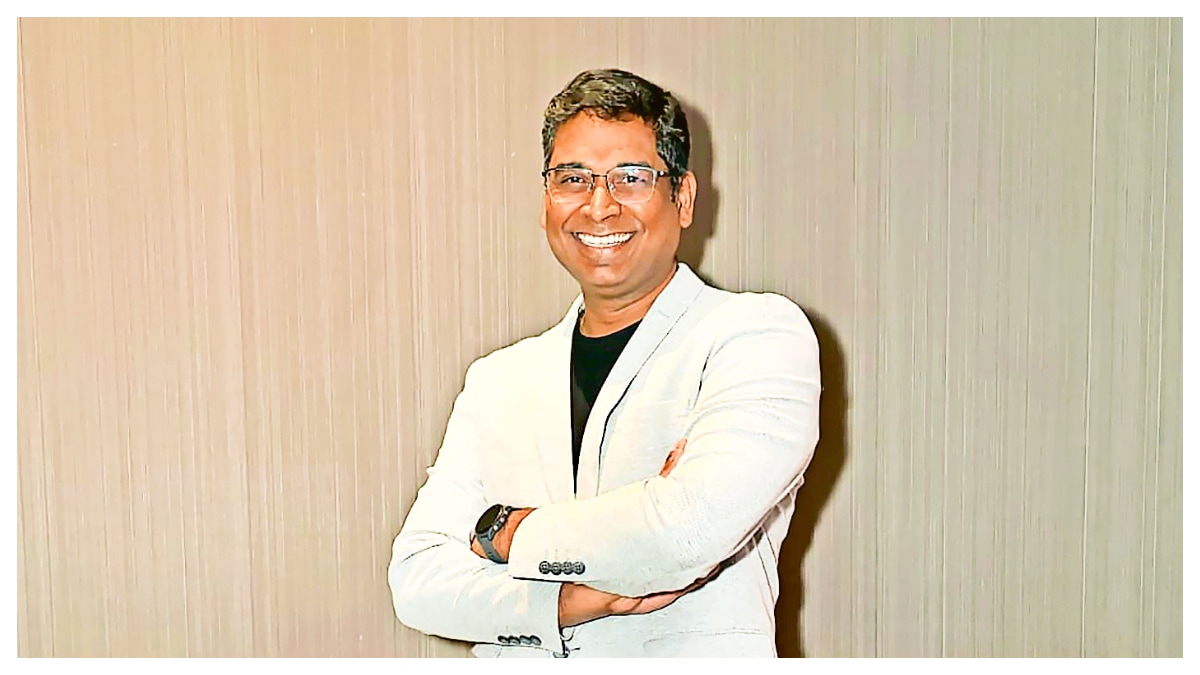
When Sandeep Deshmukh, co-founder and CEO of ElasticRun, first began building large-scale logistics and transportation networks early in his career, he realised how rigid and complex the system was. The constraints of working inside a single organisation made the gap obvious. “But when you are inside one organisation, your solutions are limited to that network. The real opportunity was in creating a platform that any brand could use, one that helps them reach different parts of the country in a cost-effective and high-quality way,” he told FE.
Foundational Learning
The thinking stayed with him. Over time, with repeated iterations and long conversations about what a more flexible system could look like, the idea that would become ElasticRun began to take shape. In 2016, it was ready to launch.
For Deshmukh, the entrepreneurial pull started much earlier. He grew up in Buldhana, Maharashtra, studied engineering at the Government College of Engineering, Jalgaon in 1996, and began his professional journey soon after. Pune with Infosys, Malaysia with DHL, and then Silicon Valley with Apple – all of it exposed him to different cultures of problem-solving. But the turning point came when he returned to India for his MBA at IIM Ahmedabad.
From there, he moved to Amazon Bengaluru, spending five years learning the mechanics of operations and the daily grind of running a business. “Entrepreneurship was always something I wanted to pursue. One of the reasons I came back to India from the US was to start my own venture. It was really during my time at Amazon that things came together. I gained exposure to operations and running a business, which I hadn’t experienced as a software engineer before. That experience gave me the ideas and confidence to figure out how to turn a concept into a working business,” he says.
From Paper Prototype to $400 Million Funding Milestone
Before ElasticRun formally existed, the idea went through almost a year of prototyping on paper. Deshmukh, along with co-founders and former Infosys colleagues Saurabh Nigam (COO) and Shitiz Bansal (CTO), spent countless hours refining the model. A logistics platform is only as strong as its ground reality, and they knew their assumptions wouldn’t survive first contact with the market. So they debated, rewrote, scratched out, and built again. Even after launch, much of the business evolved in response to real customer behaviour. “It’s been a deeply iterative journey from the very beginning.”
Crucially, Deshmukh already understood the industry’s gaps from his previous roles. Five years of immersion had given him a clear sense of the inefficiencies and the opportunity waiting beneath them. It wasn’t a leap of blind ambition, rather it was a jump supported by years of field-level learning.
Convincing his family wasn’t difficult. His earlier decision to return from the US had already signalled his intent to build something of his own. “I had taken a big leap earlier when I moved back to India from the US, leaving behind a comfortable and settled life because I wanted to build something of my own. So they knew I had that streak of wanting to create and take risks,” he says.
While there were initial worries about stability, his clarity eventually eased the concerns.
The day he actually resigned was a different experience. “You have faith in what you are building, but you also know that everything needs to align for it to work. The excitement of creating something new keeps you going,” he says.
Early customers and a few committed investors gave them the initial push. But there was also a period when everything hung loosely in the air – contracts still under negotiation, funds not yet in, future team members waiting for confirmation. “It felt like being the connecting thread between hopeful customers, investors, employees, and your own belief that it will all come together.”
Their first office was Deshmukh’s two-bedroom apartment in Pune. From that home base, the team grew until nearly 40–50 people were working out of the space. The cramped setting didn’t matter, what mattered was momentum. Once they closed the first funding round, they moved to a proper office nearby, a milestone that felt like the business had crossed its earliest threshold.
The first round, led by Mohan and Ashutosh from Norwest Venture Partners, arrived after months of discussions. At the time, they were also speaking to Kalaari Capital. For a while, nothing felt certain. Then, once one offer appeared, others followed in quick succession.
“In the end, the teams and support from Norwest and Kalaari felt like the best fit, so we decided to go with them.” The firm raised $2 million in 2016. Since then, it has raised more than $400 million from investors including SoftBank, Goldman Sachs, Kalaari Capital, Norwest and Naspers Ventures. In FY25, ElasticRun’s revenue grew 9% year-on-year to Rs 2,653 crore, and losses narrowed to Rs 145 crore from Rs 350 crore in FY24.
Today, ElasticRun powers the flow of commerce across more than 500 cities, operating over 900 warehouses and managing over four million daily shipments through an asset-light, tech-enabled network.
Leave a Reply