On December 7, 2025, at The Chinese University of Hong Kong. On a real outdoor field, a robot is carefully adjusting its posture, trying to maintain balance on a slightly trembling suspension bridge; not far away, another robot is using its perception system to identify and sort out the garbage scattered on the grass. These are not pre – set demonstrations, but real scenarios of the “5th ATEC Technology Elite Competition (Offline Competition) · Real – World Extreme Challenge” (hereinafter referred to as “ATEC2025”).
After two days of fierce competition, 13 top teams from around the world completed a series of tasks such as suspension bridge crossing, orienteering, autonomous flower watering, and garbage sorting. Finally, the team from Zhejiang University won the $150,000 grand prize with its excellent performance in the full – autonomous intelligence of robots.
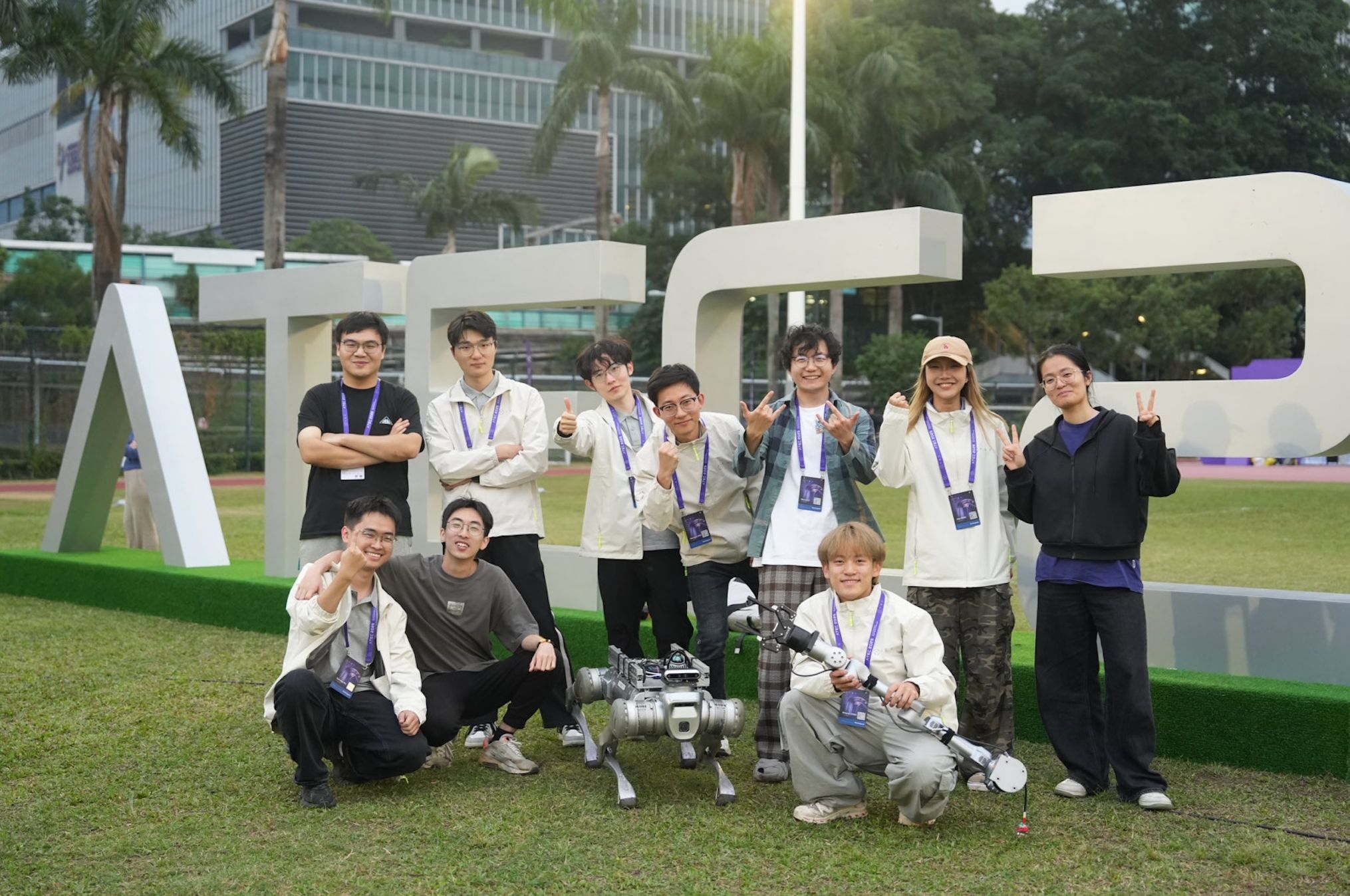
The team from Zhejiang University won the championship of the ATEC2025 Technology Elite Competition
The event was hosted by The Chinese University of Hong Kong and co – organized by the ATEC Frontier Technology Exploration Community, Peking University, Beijing Normal University, and Ant Group. For the first time, the entire competition field was set in outdoor natural terrain. The scoring rules clearly encourage “no remote control” (no manual remote – controlled operation), promoting the evolution of robots from “tools” relying on remote control to “intelligent agents” capable of autonomous decision – making.
Realizing “no remote control” means that robots need to independently complete the full – link closed – loop from perception, analysis to decision – making and execution in a real environment full of uncertainties. Any mistake in any link may lead to the interruption of the task, which poses extremely high requirements for the perception robustness, decision – making intelligence, and system stability of robots.
“The purpose of this event is to answer a core question: Can robots truly step out of the laboratory and adapt to our complex world?” said Professor Liu Yunhui, the chairman of the event’s expert committee and an academician of the Hong Kong Academy of Engineering Sciences. “We hope to promote the transformation of robots from ‘demonstration – feasible’ to ‘application – reliable’ through extreme challenges.”
The “three core capabilities of robots” proposed by Professor Liu Yunhui – walking, operating, and transforming the environment – constitute a systematic technical test framework for “real – world adaptability”. Different from previous events, each task in ATEC2025 is derived from real – life and industrial scenarios. On the real competition field composed of arch bridges, stone steps, gentle slopes, and mountains, robots need to complete a series of tasks: Orienteering tests their real – time planning and walking abilities in unknown environments; Suspension bridge crossing challenges their dynamic balance and strategy adjustment levels; Autonomous flower watering requires robots to complete fine operations such as identification, grasping, and precise watering; Garbage sorting tests their perception of complex scenarios and their ability to transform the environment through sorting.
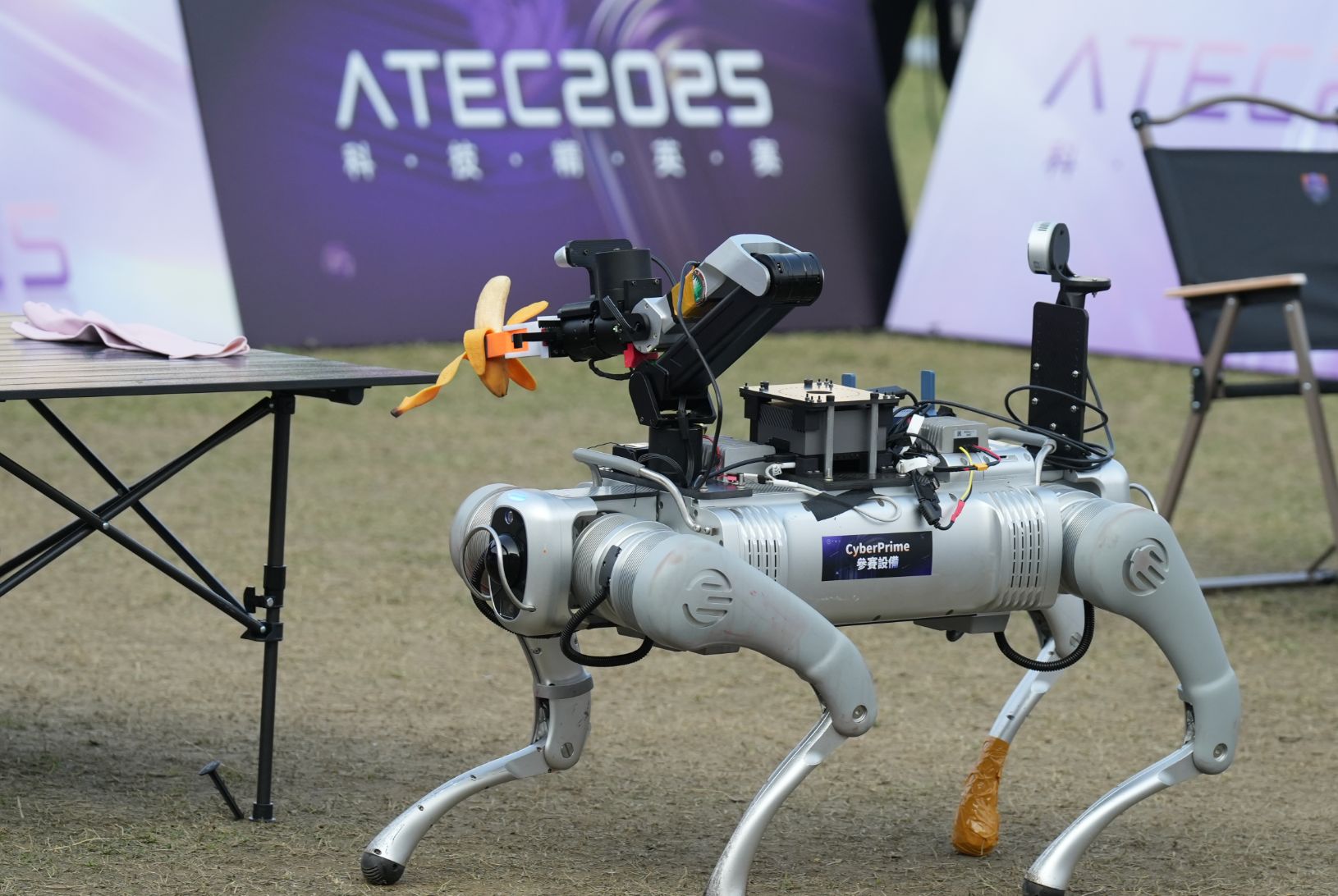
The finals of ATEC2025 set tasks such as suspension bridge crossing, orienteering, autonomous flower watering, and garbage sorting
The event focuses on the ability of cutting – edge technologies to step out of the laboratory and solve “real problems” in real – world scenarios in the future. Even if there are mistakes and adjustments during the process, the event still encourages robots to face challenges entirely relying on their own perception and decision – making systems. Every autonomous attempt marks a crucial step in the evolution from “machines” to “robots”.
Guided by the competition system of “encouraging full autonomy and exploring no remote control”, each participating team carried out creative technical explorations for complex outdoor scenarios. Facing the complexity and uncertainty of the real world, the contestants tried diverse technical paths and innovative solutions: Some teams tested traditional modular algorithms and cutting – edge end – to – end large – model solutions in parallel to find the best balance between stability and intelligence; Some repeatedly adjusted the grasping strategies of robotic arms just to improve the millimeter – level operation accuracy; Others designed a unique strategy combining lightweight control and real – time environmental modeling to deal with the dynamic shaking of the suspension bridge.
“The algorithms that are perfectly debugged in the laboratory will encounter countless accidents in the real environment,” said Zhu Chengrui, the captain of the championship team “wongtsai”. Among the participating teams, there are many international contestants from North America, Europe, Asia and other regions. The youngest team member is only 19 years old, showing the characteristics of youthfulness and globalization of the event. “This competition makes us think about how to make robots truly learn to make autonomous decisions.”
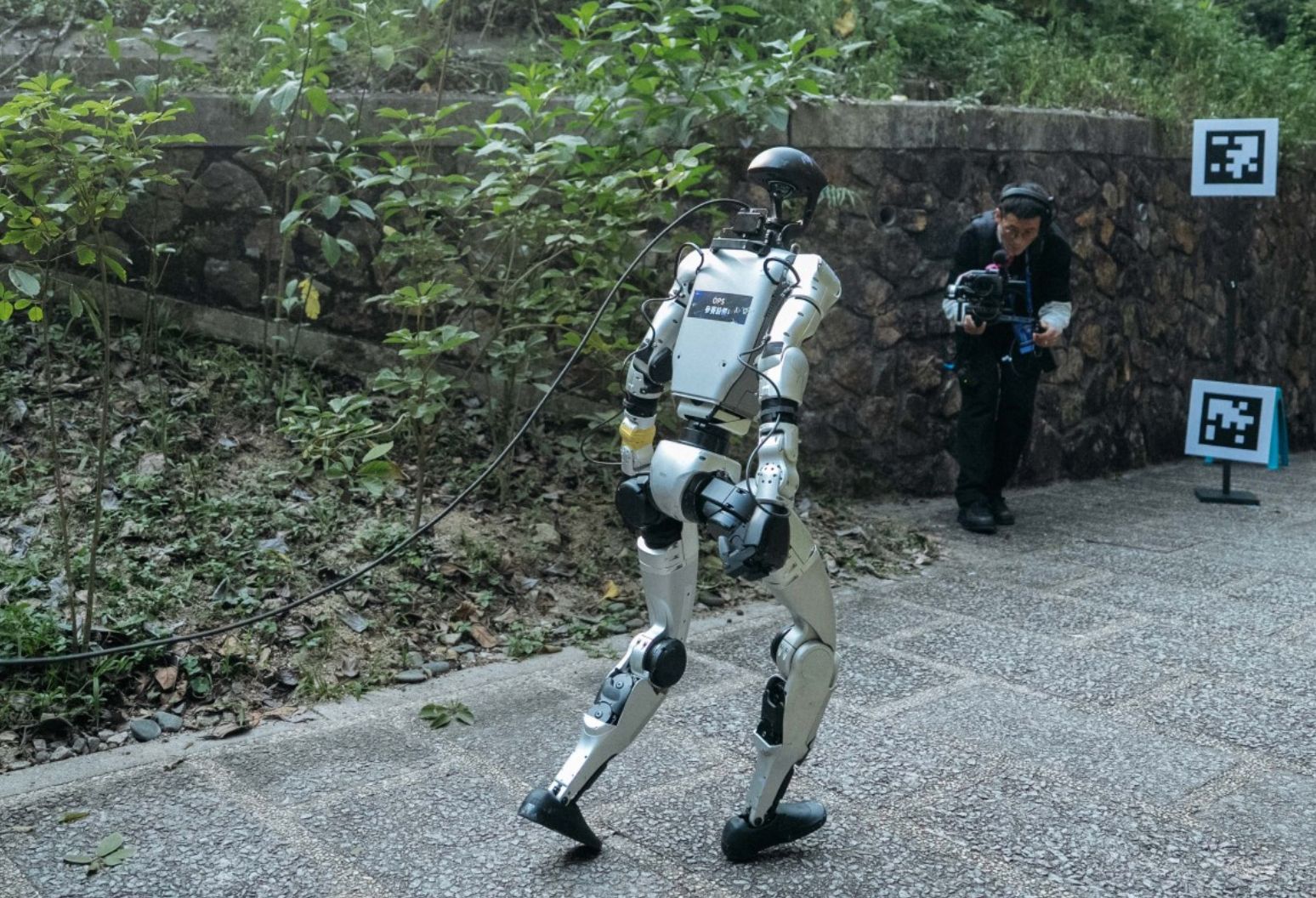
The competition system of ATEC2025 encourages full autonomy of robots and explores “no remote control”
The person – in – charge of the ATEC Frontier Technology Exploration Community said that ATEC has always been committed to the combination of industry, academia, and research. It hopes to stimulate technological innovation by creating an “Olympiad” in the field of robots. This event gathered global authoritative scholars such as Xie Lihua, an academician of the Singapore Academy of Engineering, and Masayoshi Tomizuka, an academician of the US National Academy of Engineering, to participate in the review and jointly explore the future development path of robot technology.
As one of the event’s initiators, the person – in – charge of the Technology Strategy Department of Ant Group said that Ant Group has long supported the ATEC event based on a belief: The future of AGI technology development is to achieve the deep integration of machine intelligence and the physical world. On the way to promote artificial intelligence from “data cognition” to “environmental interaction” and “action execution”, we look forward to another fundamental breakthrough in technology. This year, the ATEC organizing committee chose a difficult but real path. They put the competition field in mountains, grasslands, stone steps, and suspension bridges; let robots face the disturbances of the real world; and designed each question not for them to “perform well” but for them to expose their real weaknesses in collisions. Because if the problems are not real, they will not lead to real technological progress. Only “real problems” can let the industry know what to break through next.
In active response to the strategic plan of the Hong Kong Special Administrative Region Government in the field of embodied intelligence, this event not only demonstrates Hong Kong’s international vision in the field of science and technology innovation but also consolidates its position as a research hub for artificial intelligence and robot technology. This extreme test completed in a real environment has established a clear industry benchmark for the “full – autonomy” intelligence of robots. Although the event has ended, the exploration path from “demonstration tools” to “autonomous intelligent agents” now has a clearer direction because of this extreme test in the real world.
Leave a Reply