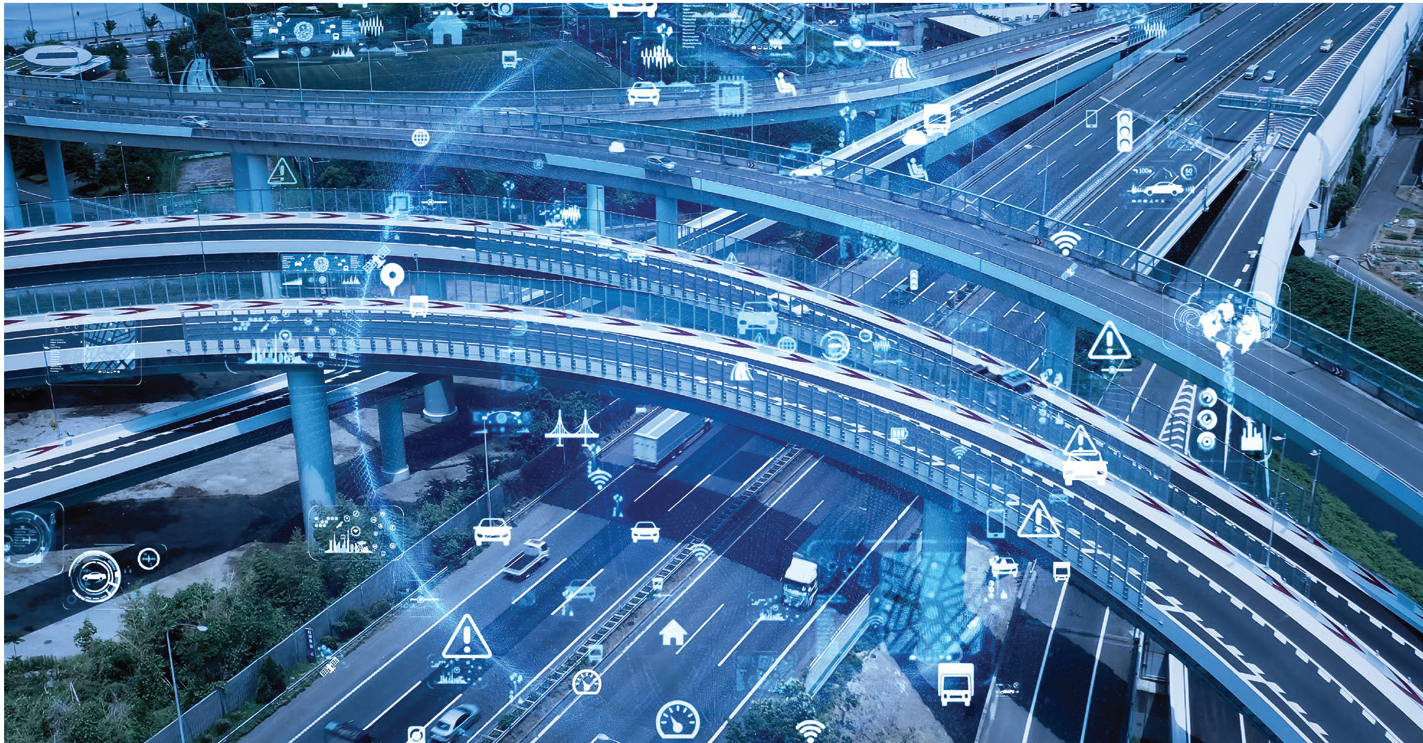
 Artificial intelligence (AI) is increasingly becoming the backbone of India’s road sector. Right from planning and construction to operation and maintenance, AI-enabled systems are changing how roads are designed, constructed and managed. There has been a shift from isolated pilots to scalable, data-driven approaches that aim to improve safety, extend asset life, enhance traffic management and accelerate project delivery.
The integration of AI with drones, light detection and ranging (LiDAR) systems, sensors, geographic information systems (GIS) and building information modelling (BIM) is enabling proactive maintenance, smarter construction decisions and more resilient infrastructure capable of withstanding rapid urbanisation, climate risks and rising mobility demands.
The deployment of AI in roads has been guided by a mix of governance strategies and collaboration models. Central and state programmes, private-public partnerships and research collaborations are shaping how AI solutions are tested, scaled and integrated into everyday management. Many pilots have explored digital twins, drone-based surveys and sensor networks, with a clear emphasis on learning from early results before broad deployment. However, several challenges persist. Ensuring data quality and interoperability across agencies remains critical, as does strengthening cybersecurity, upskilling the workforce and addressing privacy and equity concerns. More importantly, effective governance requires clear data standards, transparent performance metrics and accountable decision-making processes when AI-informed insights influence budgets and policy direction.
The private sector is also engaging through technology vendors, engineering firms and co-delivery models that combine domain expertise with AI capabilities. This collaboration has the potential to accelerate standardisation, drive best practice adoption and shorten the learning curve for states and agencies as they pursue more ambitious road programmes.
Increasing digital deployments and safety through technology
The digital backbone of modern roads is becoming more sophisticated and interconnected as technologies progress and the government increases integration into various processes to build a robust road network. To continuously monitor conditions, identify faults and manage assets in real time, Indian road projects are increasingly depending on an integrated digital ecosystem that includes GIS, BIM, drones, sensor networks and centralised asset management platforms.
The National Highways Authority of India has set up a specialised AI cell to streamline highway construction, quality control and maintenance, including the use of AI-based 3D network survey vehicles for monitoring over 20,000 km of highways. Uttar Pradesh has launched the country’s first AI-based road safety project to predict accident-prone spots and automate enforcement using data from traffic, weather and material sensors. Other projects, such as Project MAARG and the adoption of drones and LiDAR, have also made the use of AI for proactive asset management, real-time monitoring and smarter road planning.
The use of digital twins, in particular, simulates how roads perform under various loading, climate and traffic scenarios, enabling planners and operators to anticipate issues and optimise interventions before problems arise. This supports continuous auditing and automated quality checks, thereby enhancing transparency and accountability across construction and maintenance phases and reducing cost overruns and delays for projects. Major expressways such as the Delhi-Mumbai Expressway have leveraged digital twins for monitoring construction progress, predictive maintenance and traffic flow simulation. In smart cities such as Pune and Surat, digital twins integrate data from utilities, traffic and environmental sensors for smart management and real-time planning.
Enhancing safety
Safety has emerged as a core focus area where AI is delivering tangible benefits. By fusing accident data, vehicle telemetry, environmental conditions and road geometry, AI-powered safety analytics map high-risk corridors and forecast where incidents may occur. Such foresight allows authorities to implement targeted safety measures, including adjusted speed regimes, enhanced signage and lighting, and proactive enforcement, ultimately reducing crashes. Vision-based surveillance and adaptive analytics further assist in detecting unsafe driving behaviours, supporting investigations and monitoring compliance.
In 2025, a road safety pilot programme leveraging technology was launched in Uttar Pradesh. Implemented by ITI Limited in collaboration with mLogica and backed by the Ministry of Road Transport and Highways (MoRTH), this AI-powered project consolidates data from accident records, vehicle telematics, weather, driver histories and roadway characteristics to predict accident-prone black spots, understand root causes and generate real-time policy dashboards. The initiative aims to improve public safety with targeted interventions, simulate the impact of preventive strategies and modernise traffic enforcement through data-driven insights.
Similar efforts have begun expanding into broader geographies, signalling a durable shift towards predictive safety management rather than reactive responses to issues. This is creating a framework for more uniform, higher safety standards across the road network in the country.
Asset upkeep
The integration of AI-driven methods is also transforming asset management and maintenance. Predictive maintenance techniques, which are becoming more and more popular, incorporate data from drone-based condition assessments, acoustic and vibro-acoustic monitors, and pavement sensors to predict deterioration and plan prompt interventions. This strategy reduces unplanned outages, prolongs pavement life and enhances traffic flow by preventing abrupt disruptions caused by repairs. Digital twins for entire corridors, bridges and culverts allow for targeted repairs and accurate condition monitoring, which lowers life cycle costs and downtime. Scheduling, quality control and risk management are all streamlined by the use of AI-enhanced project management tools, which improve public resource utilisation and lead to more predictable and timely delivery.
In the case of traffic management and mobility, AI-enabled systems are making urban travel smoother and more efficient. With an ever-increasing number of vehicles on the road in Indian cities and growing traffic issues, the use of technology and AI-enabled mechanisms helps relieve the stress from city roads through more informed and data-driven management. Intelligent traffic management systems (ITMS) support adaptive signal control, rapid incident response and dynamic routing, therefore reducing congestion and lowering emissions in busy corridors. The use of AI also improves toll operations, lane management and ramp metering, optimising the utilisation of existing capacity. Data-driven analyses of travel-time reliability inform capacity expansion plans, ensuring investments align with actual demand and anticipated growth. This layer of governance helps cities and highway authorities transition from static plans to adaptive, resilience-focused management.
Key pilot projects
There are notable case examples in 2025 that illustrate the growing AI momentum. AI-based road safety pilots have demonstrated how data fusion, predictive analytics and real-time dashboards can identify accident hotspots and guide targeted interventions. Metropolitan regions have piloted adaptive traffic control and ITMS to alleviate congestion, while many construction programmes have begun integrating AI into asset management and construction-quality assurance. Together, these initiatives reflect a movement from isolated experiments to a nationwide, AI-enabled road system that supports safer and more efficient mobility for millions of users.
The intelligent Solutions for Road Safety through Technology and Engineering (iRASTE) project in Nagpur, led by IIIT Hyderabad and partners like CSIR-Central Road Research Institute, uses AI through advanced driver assistance systems to identify accident-causing scenarios and alert drivers. It also analyses road “greyspots” (potential accident-prone areas) to prioritise maintenance and prevent blackspots. This technology is planned for expansion in Telangana, Goa and Gujarat with applications in highway bus fleets.
The MoRTH has approved the artificial intelligence-machine control technology (AI-MC) for 26 national highway projects in states like Bihar, Jharkhand, Odisha, Gujarat, Madhya Pradesh and Punjab. This includes projects like the Patna-Ara-Sasaram highway and the Sambalpur bypass. The use of AI-MC improves construction quality, reduces material waste, speeds up execution and ensures strict adherence to design through GPS graders and smart rollers. More large projects with AI-MC are proposed, including roads around Bengaluru and Surat-Chennai expressway segments.
The integrated Road Accident Database (iRAD) platform has been implemented across India, facilitating real-time accident data collection from multiple stakeholders. AI-enabled data analysis aids in evidence-based decision-making to reduce accidents and improve black spot management.
These pilots and their integration with the help of government initiatives show how the centre views these important and increasingly effective technological measures to further improve the quality of roads and highways in the country. These not only help in advancing the road sector but also improve the quality of experience for consumers while encouraging Made in India technologies and innovations.
Conclusion
The growing prominence of AI in India’s road sector is redefining how roads are planned, constructed, operated and maintained. The resulting benefits include higher safety, greater reliability and more efficient use of public resources, all of which align with the pressures of rapid urbanisation and rising mobility demands.
Realising AI’s full potential will require sustained collaboration among government bodies, industry players and research institutions, underpinned by robust data standards, resilient cybersecurity and inclusive governance. When these elements come together, India’s highways and roads can become smarter, safer and more sustainable, delivering meaningful improvements in everyday travel and long-term infrastructure resilience.
Himanshu Tagore
Leave a Reply