Indian students and workers seeking to study and work in the US are finding themselves in a tight spot. The Trump administration’s crackdown on legal nonimmigration routes such as F-1 study visas for students and H-1B visas for workers has raised concerns among many Indian students, parents, and talented workers.
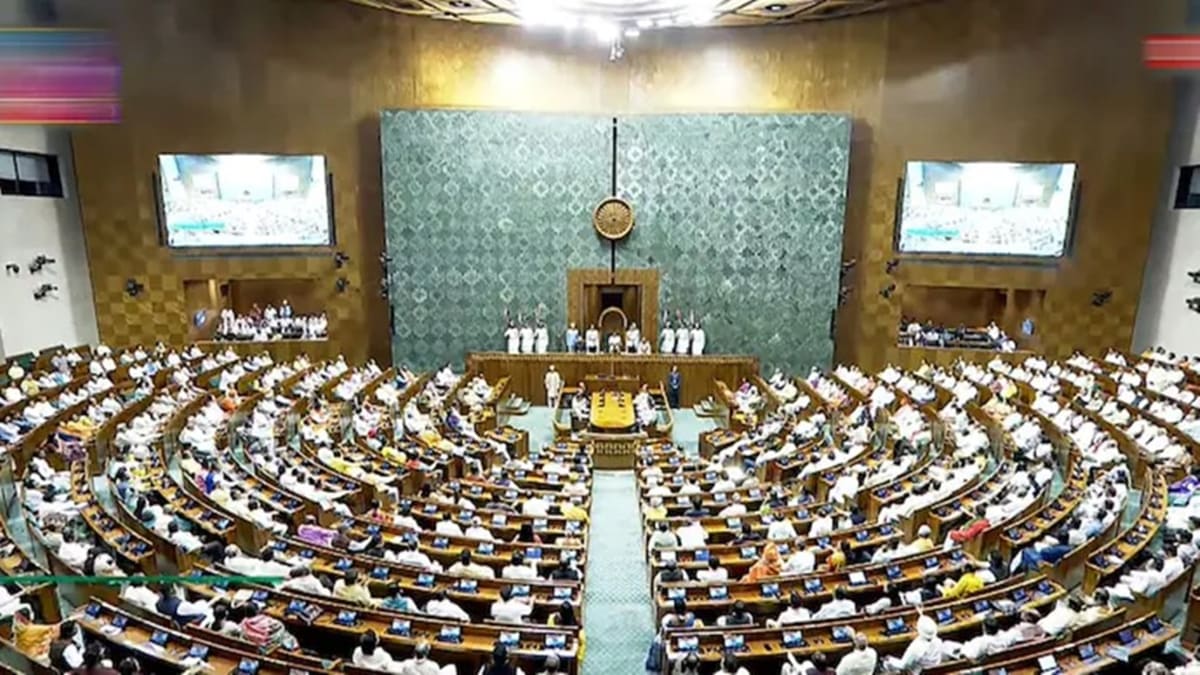
Queries for the Minister of State in the Ministry of External Affairs on the reduction of US visas for Indians were raised in the ongoing Lok Sabha session as an unstarred question.
One of the questions was whether the recent suspension or reduction in H-1B visa sponsorships by US firms is affecting Indian professionals and students seeking work and study opportunities abroad.
Since September 21, a new H-1B visa rule has been in place, which requires US firms to pay $100,000 as a petition fee before hiring any foreign worker. This has pushed the cost of employing foreign workers higher for US companies.
A question was also raised whether Indian students and skilled workers face increased uncertainty or hurdles in obtaining US student visas (F-1) or work visas (H-1B).
Since January 2025, foreign students seeking F-1 visas face enhanced scrutiny and verification of their applications, resulting in delays in processing.
Questions were also raised about the government’s tracking method for Indians who immigrate to the United States for studies and work — Whether the government regularly monitors and publishes data on Indian nationals whose visa or work-study opportunities abroad were delayed, blocked or withdrawn, if so, the impact of it on India’s talent pool, and whether the government is reviewing diplomatic and consular responses to protect the interests of Indian students and professionals abroad in light of changing visa regimes, if so, the details thereof?
Government Reply
Kirti Vardhan Singh, the Minister of State in the Ministry of External Affairs, replied:
The Government regularly monitors developments relating to visa and mobility policies of partner countries, including the United States, to assess potential implications for mobility and the economy.
Since the measures in the U.S. have only recently come into effect, consolidated data on delayed, blocked, or withdrawn visa or work-study opportunities for Indian nationals is not presently available. Such data rests with the visa-issuing country and becomes available only if made public by them.
The government of India remains actively engaged on all issues concerning the mobility of Indian professionals and students. While visa issues are sovereign matters, India believes that skilled talent mobility has long contributed to innovation-led growth in both countries, and stakeholders on both sides continue discussions aimed at ensuring sustained support for innovation-driven sectors.
The government will continue to take appropriate diplomatic and consular measures to protect the interests of Indian students and professionals in light of evolving visa regimes.
Govt. Reply on H-1B Visas
The reply on H-1B visas stated that USCIS has clarified that the supplemental $100,000 payment will only apply to:
- H-1B petitions filed on or after September 21, 2025, for individuals who are outside the United States and do not hold a valid H-1B visa.
- A petition that requests a change of status, amendment, or extension of stay, and USCIS finds the applicant ineligible for these requests.
- The applicant departs the U.S. before the petition is adjudicated.
The fee does not apply to those who have submitted petitions prior to 12:01 a.m. Eastern Daylight Time on September 21, 2025. Further, the $100k fee will not apply to H-1B petitions filed on or after September 21, 2025, requesting a change of status, amendment, or extension of stay for someone already in the U.S., provided USCIS approves the request.
For example, F-1 students already in the U.S. and who are transitioning to H-1B status without leaving the country, such as after completing their Optional Practical Training (OPT), will not be impacted by the new $100K H-1B visa fee.
Since the proclamation took effect only on 21 September 2025, there is presently no comparable data available to assess its impact on Indian professionals and students, informed the Minister. Separately, the U.S. Department of Homeland Security is considering a weighted selection mechanism that would prioritise higher-skilled and higher-paid applicants for H-1B visas. However, data on the actual impact is not yet available.
Govt. Reply on F-1 Study Visas
The minister also shared the latest situation on the F-1 visa front – The U.S. Administration has proposed limiting the stay of foreign students and exchange visitors (J-1 visa) to the length of their programme, up to a maximum of four years.
Anyone needing more time would have to apply for an extension with USCIS, and if the extension is not approved before their visa end date, they would fall out of status even while still studying. The comment period on this proposal has closed, and no decision timeline has been announced.
The U.S. Administration is also considering changes to the Optional Practical Training (OPT) with the stated aim to prevent misuse, increase monitoring of foreign students, protect American workers, and address concerns related to fraud and national security.
Leave a Reply