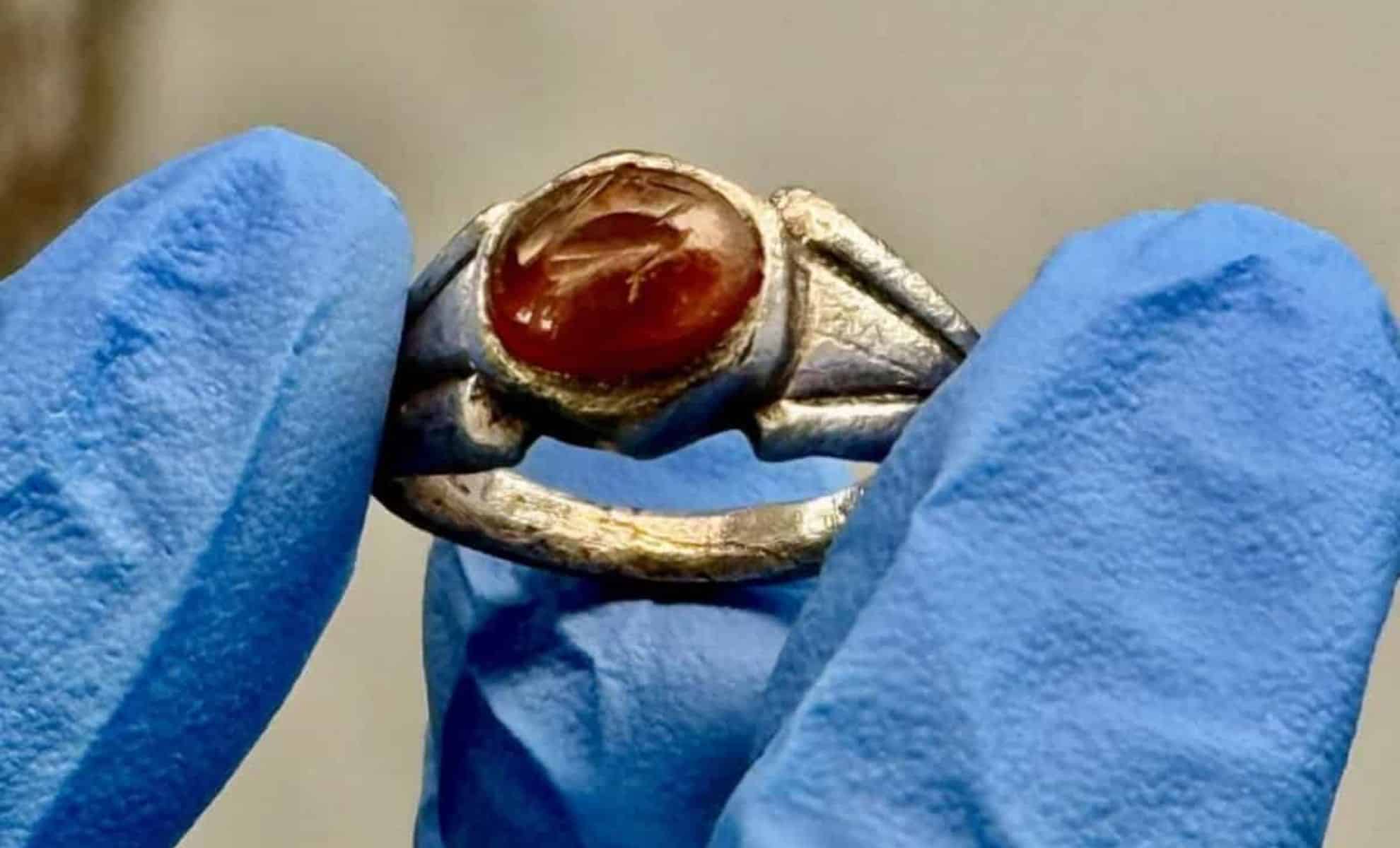
Found at Magna Roman Fort in Northumberland, this remarkable artifact offers a rare window into life on the northern frontier of the Roman Empire.
The ring was uncovered in August by a volunteer, Shaun, who was working at the fort when he made the startling discovery. He immediately alerted Rachel Frame, senior archaeologist at Magna, who was struck by the artifact’s excellent condition.
Despite having been buried for over 1,500 years, the silver ring with an intaglio gemstone, likely made of carnelian, was found almost intact. The centerpiece of the ring features a small but clear carving of a hare, an animal that held significant symbolism in the Roman world.
A Glimpse Into Roman Frontier Life
Magna Roman Fort, located near the western end of Hadrian’s Wall, has long been a focal point for archaeologists seeking to understand the lives of the Roman military and civilians living on the empire’s northern edge. This site, along with the nearby Vindolanda, has yielded countless artifacts over the years, providing valuable insights into Roman life at the frontier. The fort itself is part of a series of military outposts that stretched along Hadrian’s Wall, a key defensive structure built by the Romans to protect their empire from invasions by northern tribes.

The discovery of the ring is significant not only because of its preservation but also because it adds to the growing collection of artifacts from this area. According to the Vindolanda Charitable Trust, the ring is one of many items found at Magna and Vindolanda that help researchers piece together the daily lives of those who lived and worked in such a remote and often challenging environment. These finds have included personal objects like leather shoes, coins, and tools, all of which have deepened our understanding of the Roman presence in Britain, reports ZME Science.
Symbolism of the Hare
The carving of a hare on the ring is particularly intriguing. In Roman culture, hares were often symbols of fertility, agility, and rebirth. They also appeared frequently in Roman art, where they were considered motifs of luck and were associated with the natural world. The hare’s symbolism in this context suggests that the ring may have held personal or spiritual significance for its owner.
Although the precise meaning of the hare in this specific case remains speculative, the choice of this animal points to the cultural and symbolic richness of the Roman world. According to Rachel Frame, the ring is not just a beautiful piece of jewelry, but also a testament to the symbolic beliefs that permeated everyday life in the Roman Empire.
The Mystery of the Owner
While the ring itself is a beautiful and well-crafted artifact, it also raises questions about its original owner. The excavation provided no immediate clues about the person who wore the ring, adding an element of mystery to the discovery. Rachel Frame expressed a deep curiosity about who the owner might have been. “Was it worn by a man or a woman? Who were they and why were they at Magna? Did they lose the ring, and how did they react when they realized?” Frame mused.
These unanswered questions only add to the allure of the find. The ring’s discovery is one of many that have been made in recent years at Magna and Vindolanda, which continue to yield personal items from the past. While we may never know the full story behind the ring, its discovery provides a fascinating glimpse into the lives of those who lived on the edge of the Roman Empire, offering new layers to the ongoing story of Roman Britain.
The ring has already captured the public’s attention, even making its television debut in an episode of Sandi Toksvig’s Hidden Wonders, which aired on November 18.
Leave a Reply