With over 4,600 in-person and online participants from 146 countries, the 14th edition of the Forum on Business and Human Rights reached a new record. This session’s topic was “Accelerating Action on Business and Human Rights Amidst Crises and Transformations”. The topic couldn’t be more relevant as the world is experiencing multiple emergencies, including a triple environmental planetary crisis, conflict situations, democratic backslides, economic and financial crisis, and corporate complicity in human rights violations. At the same time, the UN is facing a liquidity crisis which was evidenced by a reduced number of sessions during the Forum and a plea by the High Commissioner to financially support OHCHR as ‘it is in survival mode.
ISHR participated in the Forum and, in partnership with human rights defenders, Indigenous Peoples and civil society organisations, we engaged in different activities before, during and after the Forum in order to ensure that the people most directly impacted by the issues and violations are heard first hand by policy makers. We also showcased the ’Business frameworks and actions to support human rights defenders: a retrospective and recommendations’, a study that takes stock of the frameworks, tools, and advocacy developed over the last decade to protect and support defenders in the context of business activities and operations.
Below is an overview of the main activities ISHR was involved in.
Zero Tolerance Initiative annual meeting
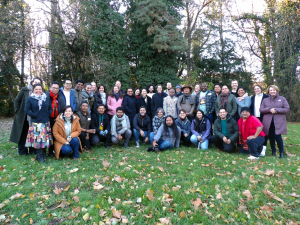
Photo credit: ZTI
The Zero Tolerance Initiative (ZTI) – a global coalition led by Indigenous Peoples, community representatives and civil society organisations, held its annual meeting the Saturday before the start of the Forum. ZTI works collectively to address the root causes of attacks and violations against human rights defenders linked to business activities and global supply chains by implementing the Geneva Declaration, the founding document of ZTI.
One of the main topics that were addressed was the situation of environmental human right defenders and Indigenous Peoples, including situations of democratic backslide and civil society shrinking space. Discussions also focused on the progress and challenges in implementing business policies on zero tolerance attacks against defenders, human rights in the context of just energy transition and the concerning current funding situation of some organisations and movements.
Environmental human rights defenders continue to be at risk despite business policies and corporate commitments
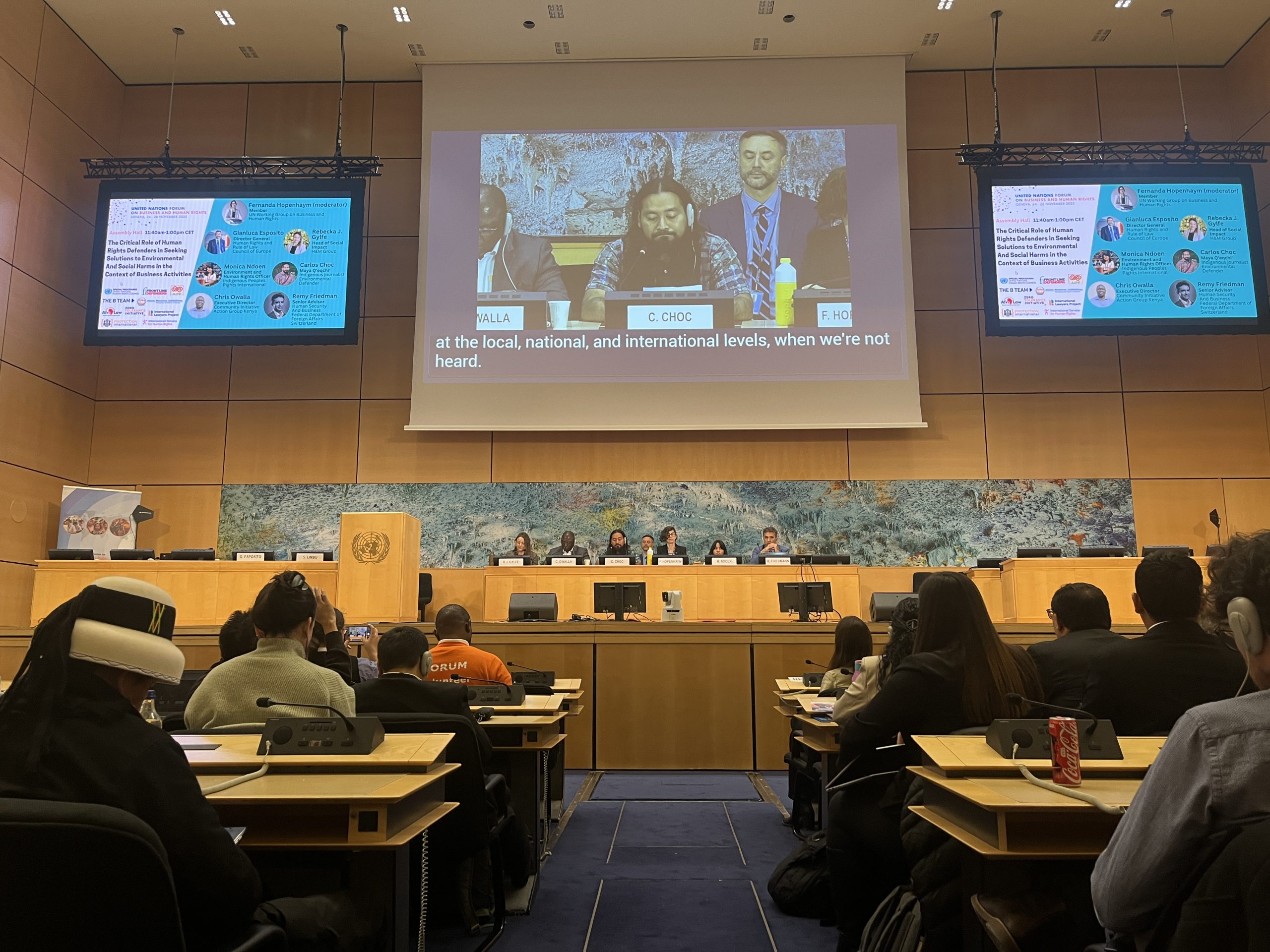
ISHR, as a member of the Zero Tolerance Initiative, helped organise one of the main panels during the Forum, titled: ‘The critical role of human rights defenders in seeking solutions to environmental and social harms in the context of business activities’. The discussion aimed to share experiences from Guatemala, Indonesia and Kenya on the challenges that environmental defenders face in the context of business activities and corporate practices, that, coupled with lack of accountability, put defenders at greater risks. This issue was highlighted by Carlos Choc, defender from Guatemala, who called for 30 seconds of silence to honour defenders who have been murdered because they defended their communities’ rights and the planet. This moment served also as a space for reflection that united all the attendants to the session while also creating a powerful statement of solidarity.
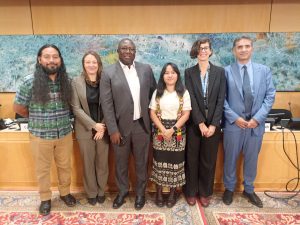
Photo credit: Fernanda Hopenhaym
Along the same line, Monica Ndoen, defender from Indonesia, talked about the situation of Indigenous Peoples in Asia. While acknowledging the progress by various actors, including businesses, governments and other stakeholders, she stated that the reality on the ground is far from improving. The lack of recognition and protection of Indigenous Peoples poses challenges to defenders to protect the resources in their territories. Increasing defenders’ recognition and protection is becoming more urgent than ever as discussions on transitioning from fossil fuels to other sources of energy are gaining momentum. Other issues include the lack of mandatory due diligence for development projects and the lack of respect of the right to free, prior and informed consent, and not mere consultation. Without the recognition of Indigenous Peoples, these rights will not be guaranteed. Monica also emphasised the increase of militarisation of Indigenous lands by State and non-State actors, which is also becoming an issue for communities who are defending their rights.
Chris Owalla, an environmental defender from Kenya, highlighted the risks that African defenders are facing. He mentioned that the number of abductions of defenders have increased in some countries because the State and some businesses consider them as ‘criminals’ or ‘anti development’. Development projects are only framed with regards to economic aspects and not really to benefit communities or to protect the environment. Attacks against environmental defenders continue to be collected by some States purely as statistics and effective measures to protect them are not implemented. Chris concluded by mentioning that the lack of visas for African defenders to participate in multilateral fora and particularly the Forum on Business and Human Rights. The lack of visas is de facto excluding environmental defenders from decision-making processes.
Remy Friedman, senior advisor on business and human rights from the Swiss Federal Department of Foreign Affairs, highlighted that the vital role of environmental defenders cross-cuts the three pillars of the UN Guiding Principles on Business and Human Rights. Human rights due diligence should also mean supporting civic space, dissent, and incorporating the risks for human rights defenders, he said. States should enable a supporting environment and recognise the legitimate role of human rights defenders, including the rights to information, freedom of expression and association. Remy also shared the ways in which the National Action Plan incorporates practice and concrete tools across the supply chain, and supports the work of human rights defenders against ill-treatment and violence including abuses by businesses.
Rebecka J. Gylfe, from H&M, emphasised that integrating protection for human rights defenders and other stakeholders in companies’ due diligence is essential, including by not accepting harassment or intimidation against them. She also advised companies to know who the rights-holders are, be mindful of their time and resources, not overpromise, integrate feedback, be transparent, recognise complex situations including conflict of interest, and build relationship and trust.
At the end of the session, it was clear that voluntary commitments are not enough to protect human rights defenders. While there has been some progress in policy making, companies should look at the implementation of such policies. In addition, binding regulations and remedies are key to make sure that attacks against defenders do not go unpunished.
During the session, the Lawyers’ Association for Human Rights of Nepalese Indigenous Peoples (LAHURNIP) received the 2025 Human Rights and Business Award. LAHURNIP has worked with grassroots Indigenous communities in Nepal to defend their human rights, and to seek justice and remedies for those harmed by corporate and government activities.
Paths on corporate accountability in the context of Palestine
ISHR, the Business and Human Rights Resource Centre and Front Line Defenders organised a parallel event to discuss how corporations and investors are involved in, and must be held accountable for, the ongoing genocide and system of apartheid against the Palestinian people. The event benefited from the participation of Palestinian human rights defenders and the UN Special Rapporteur on the situation in the Occupied Palestinian Territory, Francesca Albanese, who shared the findings from her latest report.
OHCHR help desk on business and human rights
During this session, OHCHR launched a Help Desk open to make official OHCHR positions on the meaning and application of the UN Guiding Principles on Business and Human Rights (UNGPs) widely available. This service is not a consultancy nor a service with investigative functions or legal advice. Rather, its goal is to offer general guidance on how the UNGPs should be understood in relation to specific sectors or contexts. The Help Desk is currently able to receive requests in English language and it is open to States, business enterprises, rights holders and civil society organisations and other actors.
Finally, 2026 will mark five years since the Working Group on Business and Human Rights adopted its guidance on ensuring respect for human rights defenders in relation to protecting and respecting their vital work. We are still far behind from implementing the guidance. States and businesses should take meaningful steps to make sure that human rights defenders can safely exercise their right to defend rights.
Leave a Reply