
Two years in, the Unified Patent Court (UPC) is revealing not just where litigation happens, but which technologies are driving disputes. Using Darts-ip litigation data, we analyzed the technical fields and industries represented in UPC infringement cases between June 2023 and May 2025. The picture that emerges shows a court increasingly shaped by Electrical engineering and Information and communications technology (ICT), a cautious pharmaceutical sector and contrasts in Division-level expertise.
Electrical engineering leads the pack
As illustrated by Figure 1, the number of infringement cases in Electrical engineering increased significantly, whereas the numbers for Mechanical engineering and Chemistry rose modestly and the number of infringement cases in Instruments declined.
In terms of the rates of the changes per industry when comparing the total number of infringement cases, Electrical engineering remains the clear leader in UPC litigation from year one to year two, and its dominance is growing. In year two, 42.4% of all infringement cases involved technologies in this field, up from 39.8% in its first year. Mechanical engineering rose modestly (from 16% to 17.4%), while Instruments and Chemistry declined (14.7% from 22.6% and 12% from 13%, respectively).
This shift suggests a gradual consolidation of disputes around high-tech industries, particularly as companies test the UPC’s ability to handle complex, multi-jurisdictional enforcement in fast-moving sectors.
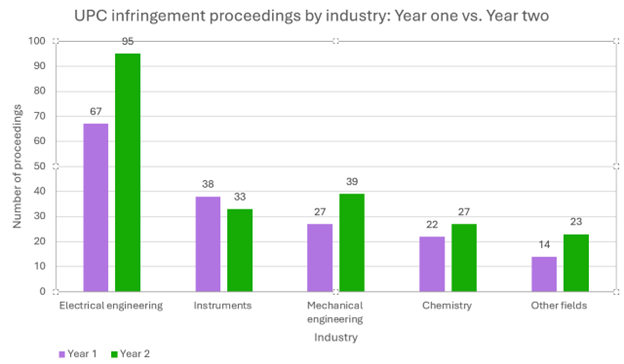
Figure 1: Technology trends in infringement proceedings during the UPC’s first and second years
Information and communication technologies: Evolution within electrical engineering
Within Electrical engineering, ICT — encompassing Digital communication, Telecommunications, Computing, and Audiovisual technology — continues to represent the single largest sub-industry. However, its share dropped slightly, from 38.5% in year one to 35.4% in year two. A change in the subindustry of Electrical engineering is observed. Within the second year, as opposed to the light decrease in ICT, the filings lean towards other sub-industries notably Electrical machinery apparatus and Semiconductors.
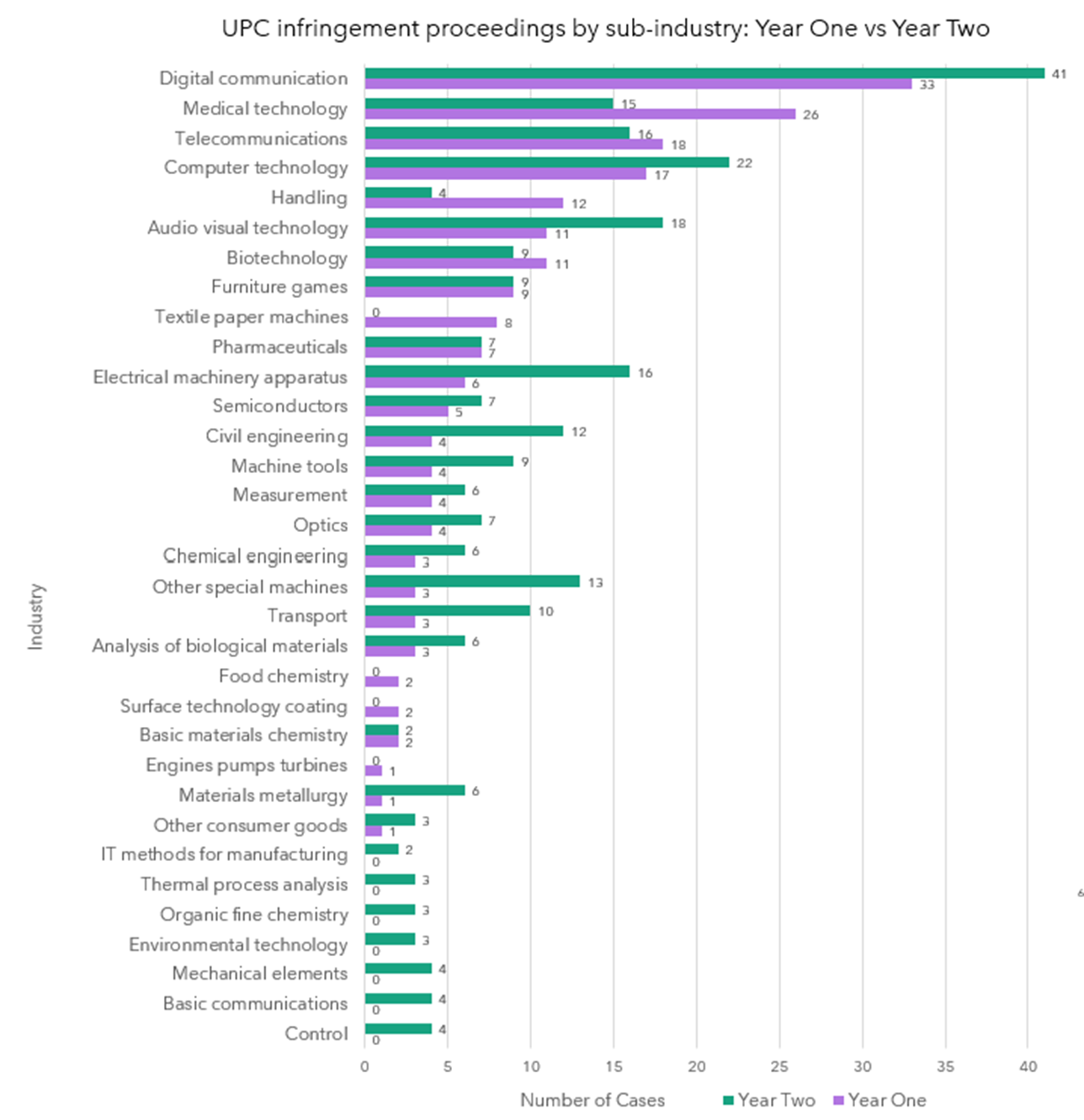
Figure 2: Technology trends by sub-industries in infringement proceedings during the UPC’s first and second years
The pharmaceutical paradox
At first glance, pharmaceutical litigation at the UPC appears limited. Narrowly defined under IPC class A61K (excluding A61K-008), pharma accounted for just 3.8% of infringement proceedings in year two, down from 5% in year one.
Yet a broader view tells a different story. When expanded to include IPC class A61 (Human and Veterinary science), including primarily Drugs and Medical devices, the category represents a much larger share: 15.1% of cases in year two. This is still down from 15.9% in year one, but provides a more realistic assessment of pharmaceutical activity at the UPC.
This ‘pharmaceutical paradox’ also highlights how narrowly defined patent classifications can obscure the true scope of activity in the pharmaceutical industry, and how Medical device litigation is gaining ground under the UPC framework.
Value insight: Chemistry
Despite a smaller proceeding share , Chemistry appears to stand out for its high case value. With this combination of low volume and high value, chemistry serves as a reminder that volume alone doesn’t define impact at the UPC.
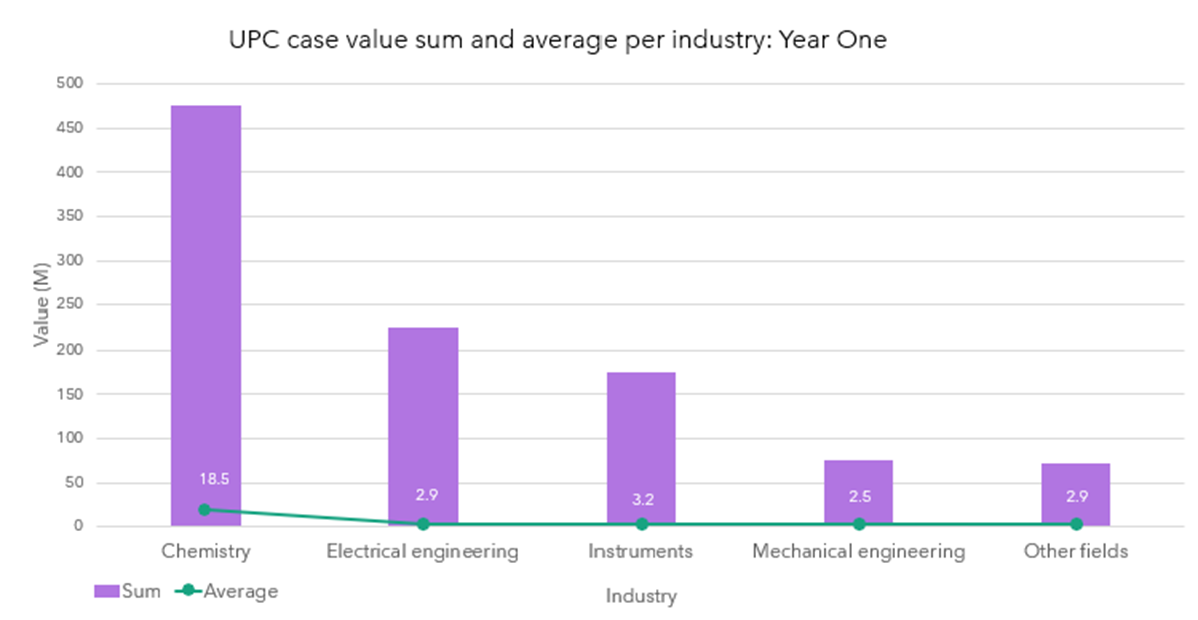
Figure 3: UPC case value sum and average per industry: Year one
From Munich to Milan: How technical focus differs across divisions
The UPC’s first two years show that Electrical engineering dominates filings, but fields like Pharmaceuticals and Chemistry continue to test the court’s handling of complex, high-value disputes.
When we focus on the technical fields of expertise of the most active UPC Local Divisions taking into account the proportion of their cases represented by chemistry, electrical engineering, instruments and mechanical engineering:
- Mannheim and Munich have a strong focus on electrical engineering (67.4% and 60.6% respectively), which represent around two-thirds of all infringement cases filed before those jurisdictions.
- The different technical domains are quite evenly distributed before Düsseldorf, Hamburg and Paris local divisions.
- This trend is also seen before The Hague, except for a very low percentage of infringement cases in Mechanical engineering (4.2%).
- On the contrary, Milan shows a very low level of activity in electrical engineering compared to the other divisions (15,8%) and a strong focus in Mechanical engineering (63,2%).
For IP owners, this means forum choice, and among other factors (e.g. duration of proceedings, success rates), technical specialization now carry real strategic weight. The Divisions most active in Electrical engineering, such as Munich and Mannheim, are rapidly developing reputational expertise, while others like Milan and The Hague show distinctive profiles. Understanding these evolving dynamics is key to aligning enforcement strategy with portfolio risk.
Methodology
This analysis covers UPC litigation from June 1, 2023, to May 31, 2025, using data from the Darts-ip patent litigation database. Technologies reflect International Patent Classification (IPC) codes of patents as assigned by the patent office where the patent was received, and not necessarily the industries where that patent is applied. IPC codes are standardized identifiers used by patent offices to categorize inventions by technical field, allowing consistent comparison of technologies across jurisdictions. Multiple IPC codes can be assigned to the same patent, and multiple patents can be involved in one case, which means multiple technologies will be counted for each technology field.
Links
Missed the big picture? The UPC at Two: What the data really says
Leave a Reply