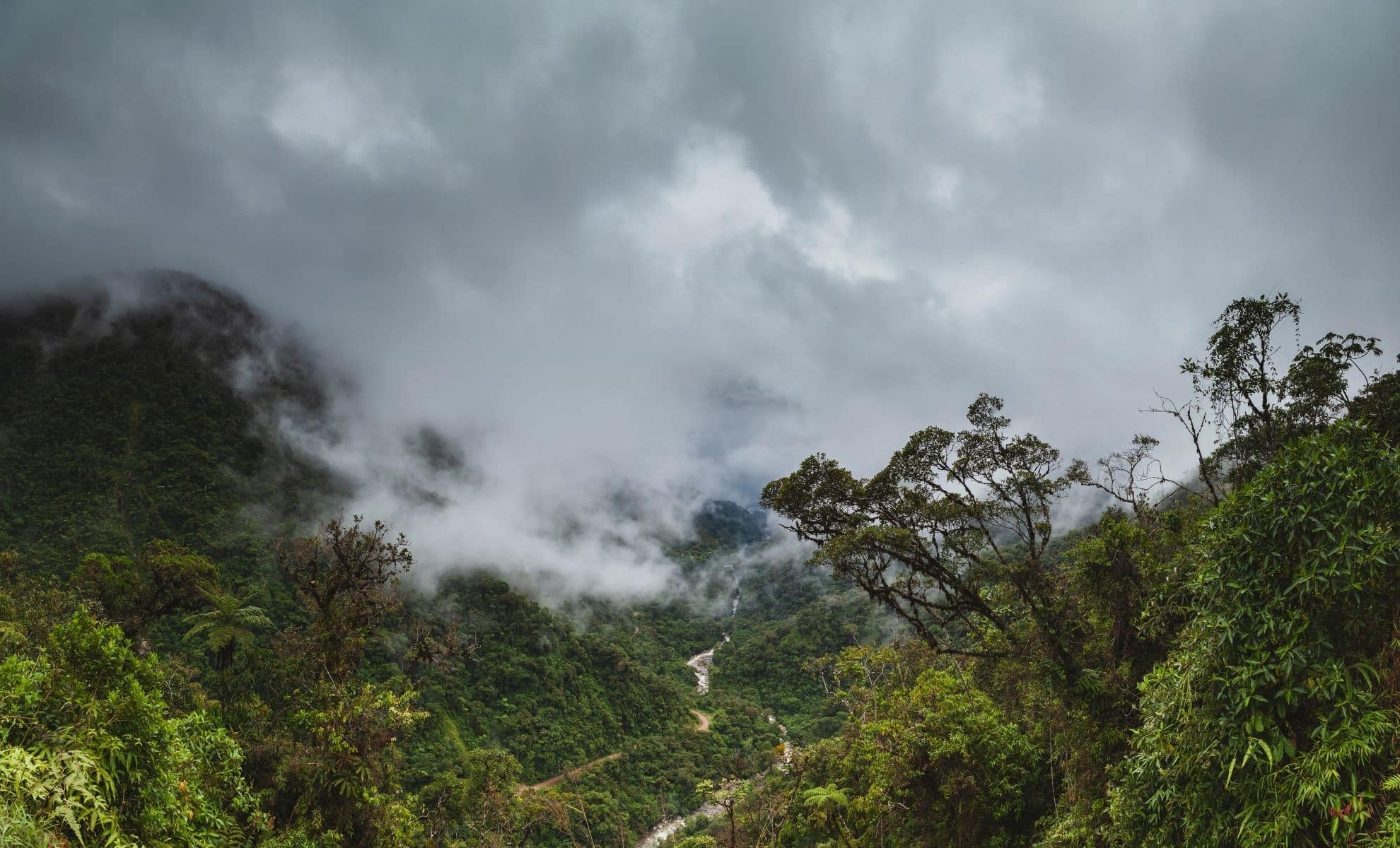
Known as the “people of the cloud forest,” the Chachapoya civilization built sophisticated urban centers and ceremonial sites, and this latest find has deepened our knowledge of their architectural prowess and societal complexity.
Rio Abiseo National Park, located in Peru’s San Martin region, has long been recognized for its cultural and natural significance. First rediscovered in the 1960s, the park was officially established in 1983 and became a UNESCO Mixed World Heritage site due to its rich archaeological heritage.
Earlier archaeological efforts in the area revealed 26 ancient structures. However, the recent discovery of more than 100 additional structures in the Gran Pajatén area has significantly expanded our understanding of the Chachapoya, revealing a network of interconnected settlements and new evidence about their sophisticated way of life.
A Technological Breakthrough in Archaeology
A team of archaeologists, with support from the World Monuments Fund, used advanced technologies to uncover the hidden structures at Gran Pajatén. From 2022 to 2024, researchers employed aerial and manual LiDAR scanning, photogrammetry, topographic registration, and technomorphological analysis to map the site in unprecedented detail.

These methods enabled the team to see through the dense forest canopy and uncover structures that had remained hidden for centuries. According to the World Monuments Fund, this technological approach has provided “extraordinary visual and scientific documentation” of the site while preserving the delicate environment of the cloud forest.
LiDAR, in particular, played a key role in the discovery. The technology uses laser light to scan the ground, allowing archaeologists to create highly detailed maps of the terrain and uncover structures that might otherwise have gone unnoticed. This innovative approach has revolutionized the study of ancient sites, particularly those located in remote or difficult-to-reach areas like Gran Pajatén, where traditional excavation techniques would have been too invasive.
Unveiling the Chachapoya Civilization’s Legacy
The newly uncovered structures at Gran Pajatén have expanded our understanding of the Chachapoya civilization. The site features ceremonial buildings adorned with high-relief friezes, stone mosaics depicting human figures, and geometric designs—evidence of a sophisticated architectural and artistic tradition. These structures suggest that the Chachapoya were not isolated but were part of a larger network of interconnected settlements, as indicated by the discovery of pre-Hispanic roads linking Gran Pajatén to other sites in the region.

This discovery highlights the complexity of the Chachapoya civilization, which flourished from the 7th to the 16th centuries. The civilization was known for its cliffside burial sites, agricultural terraces, and ceremonial platforms.
The findings at Gran Pajatén confirm the presence of these distinctive features, with researchers uncovering evidence of agricultural terraces and burial practices that are consistent with other known Chachapoya sites. The discovery also suggests that Gran Pajatén played an important role within the Chachapoya world, serving as a major ceremonial and political center.
Preservation and Conservation Efforts
The remote location of Gran Pajatén has helped preserve the site, with minimal human intervention over the centuries. However, the fragile nature of the structures—many of which are overgrown by vegetation—has posed significant challenges for archaeologists. To ensure the site’s preservation, the team undertook several conservation interventions during their fieldwork, including reinforcing stairs, stone reliefs, and partially reassembling a perimeter wall.
Ricardo Morales Gamarra, head of the conservation component of the project, emphasized that the conservation work at Gran Pajatén can serve as a model for future efforts in the region. The delicate balance between excavation and preservation is critical to ensuring the site’s long-term survival while allowing researchers to continue their work. In addition, the use of advanced technologies such as LiDAR has helped minimize the environmental impact of the excavation, providing a non-invasive way to study and document the site.
Sharing the Story of the Chachapoya
Although Gran Pajatén remains difficult to access, efforts are underway to share its rich history with a global audience. The Museo de Arte de Lima in Peru is offering a free exhibition dedicated to the Chachapoya culture and the recent discoveries made by the World Monuments Fund. By using digital storytelling tools, the team hopes to bring the stories of the Chachapoya civilization to life for people around the world, even if they cannot visit the site in person.
Benedicte de Montlaur, president and CEO of the World Monuments Fund, expressed that the use of these technologies allows the team to “share its stories widely through thoughtful, immersive digital storytelling.” While the site itself remains out of reach for most, these digital tools provide an opportunity for the public to explore and learn about the Chachapoya, ensuring that their legacy is preserved for future generations.
Leave a Reply