Among the three mainstream political parties, the CPN-UML has been the most lagging in internalising the spirit of the Gen Z movement. The party’s chair, KP Sharma Oli, who was the prime minister when the protest broke out on September 8, still undermines the movement, often floating conspiracy theories about why Gen Z-ers took to the streets that day.
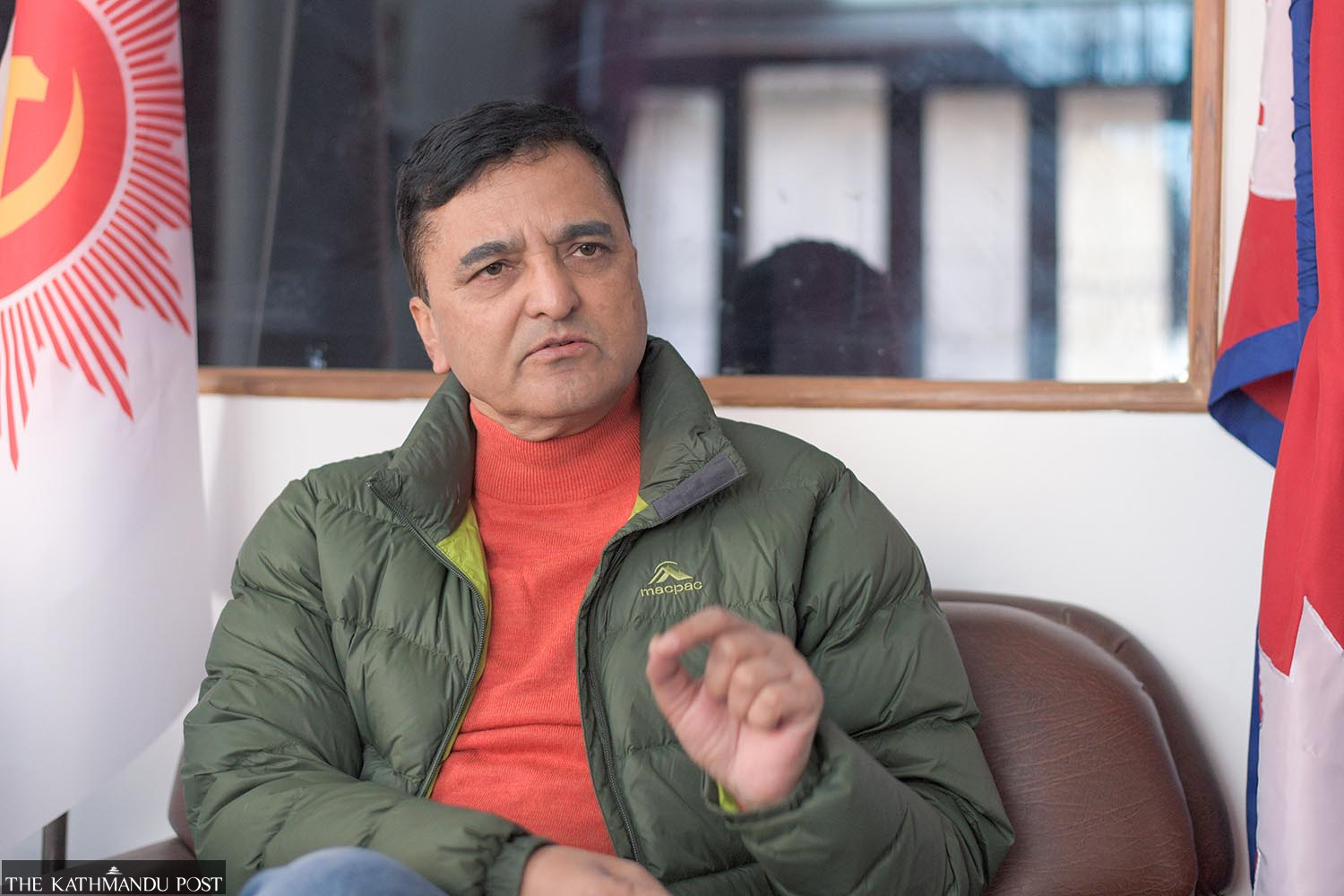
A popular demand of the agitating youths was a change in the leadership of major parties, at the very least. Albeit late, some UML leaders have started voicing dissent against the KP Oli leadership. Now, a group of officebearers have rallied behind the party’s senior vice-chair, Ishwar Pokhrel, making him the prime contender to replace Oli as UML head in the upcoming general convention. One member of the Pokhrel camp, UML Secretary Yogesh Bhattarai, sat down with The Post‘s Biken K Dawadi to discuss the party’s upcoming general convention, the need for generational power transfer in the UML, and the Gen Z movement. Excerpts.
What is the CPN-UML rank and file busy with these days?
We are currently busy with preparations for the 11th national convention of the party, which starts on Saturday in Kathmandu. Around 95 percent of the work to select around 2,200 convention delegates has been completed till now. Other works related to the management of the convention are also progressing well. We will inaugurate the convention at the open space in Sallaghari, Bhaktapur, and hold closed sessions at Bhrikuti Mandap, Kathmandu.
Is the Ishwar Pokhrel camp in the party rallying against party chair KP Oli?
Political leaders do not pit themselves against each other in the same party. So we are not exactly rallying against KP Oli. We are co-workers, and we have a cooperative attitude towards each other.
That said, we are advocating for a change in leadership. Oli has held on to power as the chairman of the party for around 12 years. He has several political achievements under his belt. But the Gen Z movement sent across a loud and clear message: The leadership of three mainstream political parties must change. This topic has also been raised in the party repeatedly. Oli cannot contribute anything new to the party in the next five years that he could not in his last decade in power. It is time that he plans a graceful exit.
The country is in a crisis. The party is as well. In this situation, an internal conflict is not optimal. Therefore, facilitating power transfer to another senior leader is the right way forward. We feel it will be best for the party if the senior vice-president of the party, Ishwar Pokhrel, leads it for the next five years.
So is it simply a matter of power transfer from one septuagenarian to another, not a generational one?
Indeed, the change we will see at the upcoming general convention is not a generational power transfer. But even if we are able to replace Oli with Pokhrel, it would be a great achievement, opening the door for generational power transfers in the future.
Have you set any agendas for the group?
We have set two foundational agendas for the group, both of which are based on the spirit of the September 8 and 9 protests. The leadership of the party needs to be transformed in the aftermath of the Gen Z movement. It is difficult for the old parties to maintain public trust while keeping the current leadership intact. Therefore, our first agenda is to restructure the party leadership in a new way. In this context, we hope that Chairman Oli will hand over power voluntarily.
Second, we need to discuss the nature of the party, what kind of party we want, and what kind of party the society expects us to be. Internal party politics of the party need to be democratic, transparent, and participatory with inclusion. The UML has become more leader-centric under Oli’s leadership. His tall personality might have had something to do with this too. The principles of the operation of communist parties are supposed to be more inclusive and collective than those of bourgeois parties. The collective nature of party operation has been deteriorating, with centralised operation gaining prominence as party chair Oli accumulates more power. With collective decision-making, we can promote the checks and balances necessary for democratic operation of the party. Therefore, our second agenda is to transform the UML into a nationalist, democratic, and pro-people party with strong internal democracy, one that can address people’s mandate in the right way.
You talk about internalising the spirit of the Gen Z movement, but the UML has fallen behind in that aspect, with Oli undermining the protests. What do you have to say?
First, the UML was in power, and Oli was the prime minister when the Gen Z movement took place. Therefore, it is natural that the party faces the most ire from the movement. And we may have made some mistakes, which we are reflecting on currently. However, two radical narratives emerged from the movement that need to be addressed first. First, that the UML was the main cause behind the Gen Z movement, and that the then PM Oli was the perpetrator who triggered the movement. Under this narrative, every achievement of the three mainstream parties is dismissed, which is a slippery slope. That way, one can go further and dismiss the constitution.
Under the second radical narrative, people accept the political system and practices of the last two decades. They claim progress on human development and social indicators and that tangible positive changes in development were felt in the past two decades. And then they go a step further to say that since the country was on the right track, the protests of September 8 and 9 were orchestrated by external elements or the ‘deep state’. This radical narrative undermines the spirit of the movement. We think that the Nepali society needs to rid itself of both of these narratives.
What then do you think is the spirit of the movement?
It is clear that the Gen Z-ers raised four main agendas through the movement: Anti-corruption, good governance, freedom of expression (against social media ban), and modernisation of the political parties. We have no qualms with these four agendas. In fact, we absolutely support them. We should have addressed these agendas on time. We should have brought the dissatisfied individuals for a dialogue. The party and the state should have paid heed to increasing corruption. Instead, we dismissed them and invited the public’s ire on September 8.
Was the Gen Z movement spontaneous then?
The protest of September 8, especially the first half of the day, was not affiliated to any person or party. It was spontaneous without a doubt. But the way the vandalism and arson followed, the rest of the movement seems to have been infiltrated. These infiltrators rendered the movement directionless.
Then, how should the UML approach this?
First, the UML must condemn all that unfolded on September 8, the state’s killing of school-going children and unarmed youth. The party must support any investigation into the developments of the day. When a neutral investigation concludes what happened that day and who were the individuals involved, the party must accept it. But more importantly, the events of September 9 must be investigated too. The activities of the day, including the arson, vandalism, and violence, are crimes of higher order. They are crimes against the state. The UML cannot refute the spirit of the Gen Z movement. Only when each of these works is completed and if in that case the UML helps the state at each step can the party regain public trust.
Should Oli take responsibility for the state killings?
The sitting head of the government during the Gen Z movement cannot separate himself from the incident. The Home Ministry and the security forces cannot either. All rests on an investigation to find out exactly what happened and if Oli was involved in the decision-making that led to the opening of fire. The narrative that Oli and then Home Minister Ramesh Lekhak are murderers cannot be substantiated since the law allows for the use of force in certain conditions. However, both must take moral and political responsibility for the state brutality on September 8. The resignation by both after the incident shows that they have taken some responsibility for the incident.
But Oli only resigned a day after. Could he not have resigned the same evening? It could have perhaps diffused some of the frustration.
My personal opinion is that the prime minister should have resigned on the evening of September 8. But it is not certain that his resignation could have stopped the violence the next day.
Lastly, citizens from your constituency, Taplejung, seem to have lost faith in the UML after the Pathibhara cable car project controversy. What do you have to say?
First, I accept the loss of support in my constituency. The public audit we face as public individuals is genuine. We must accept it. The public is more prone to consume fake news and disinformation. Sometimes, they are misled. But that is not the sole cause here. I may have made mistakes too, and perhaps I might have faltered in communicating with them. The graph for public support never remains the same. Sometimes it goes up, sometimes down. I will not be disappointed now that it is low. By the time we go to elections, I am positive that I can put myself in the midst of my constituents and hear them out, clearing out doubts and winning their support again.
Leave a Reply