China’s J-15 fighter and Liaoning aircraft carrier are in the spotlight after the J-15, operating from Liaoning, twice locked radar on Japanese fighter jets.
Japanese Defence Minister Shinjiro Koizumi said the incident was “dangerous and extremely regrettable”, adding that Tokyo had lodged “a strong protest” with China. Beijing’s foreign ministry said it rejected that protest and had lodged its own counter-protest.
Interestingly, both the J-15 fighter and the Liaoning aircraft carrier have very strong ties to Ukraine and the former USSR.
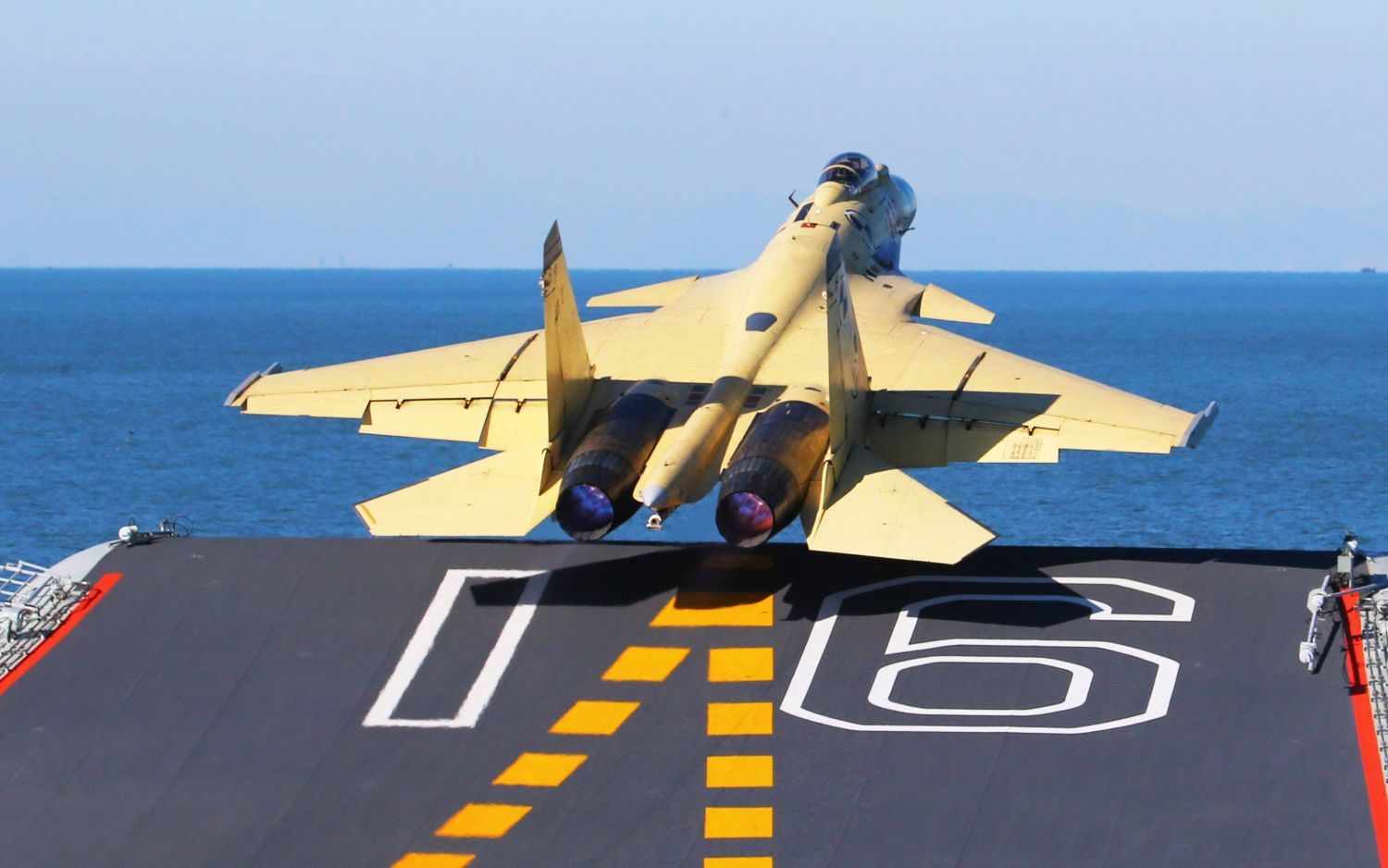
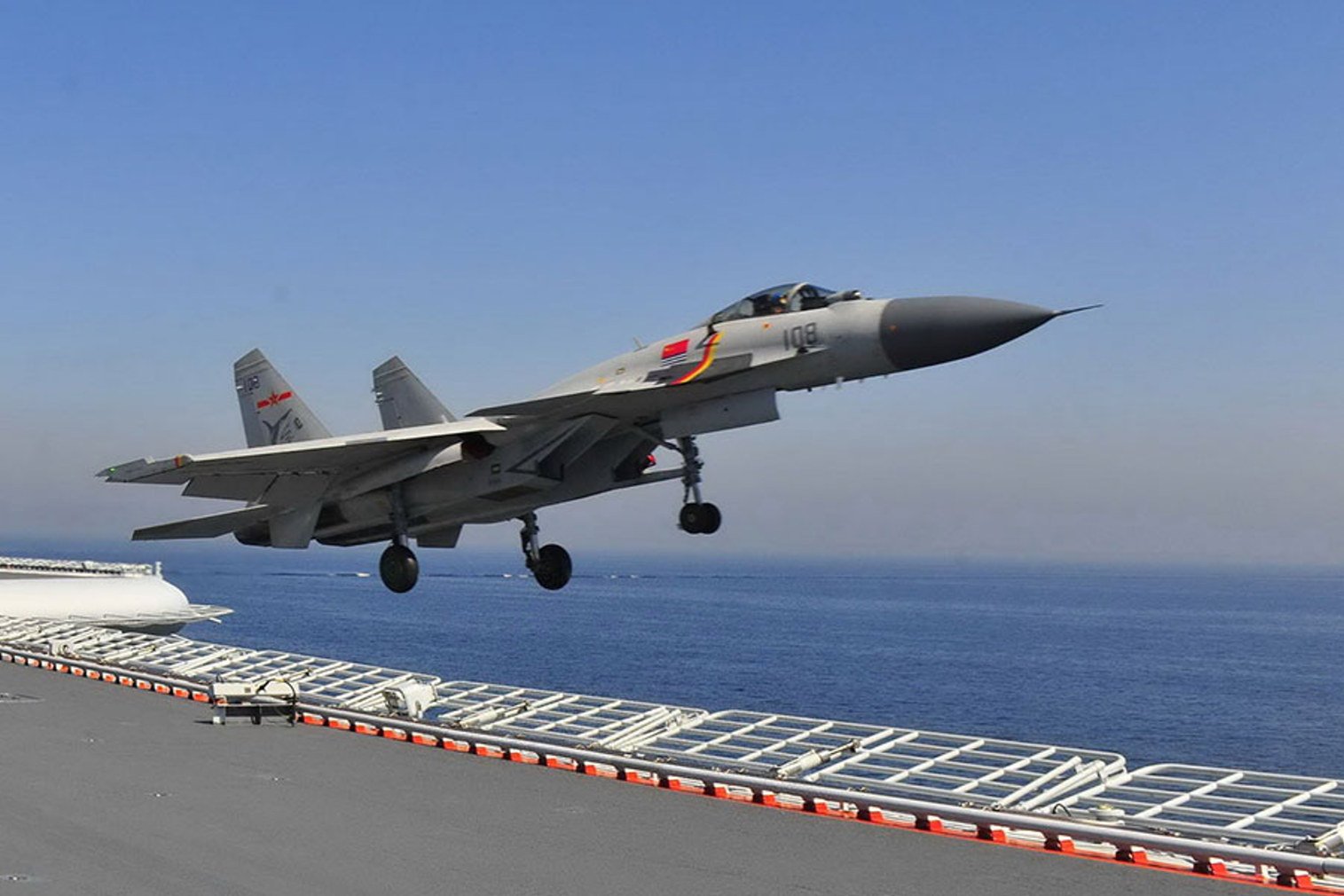
The J-15 Flying Shark is a carrier-based 4th-generation multi-role carrier-borne aircraft. It operates from Liaoning and Shandong, and has now been adapted for catapult launches on the newest carrier, Fujian.
Its origins are no secret. In 2001, China quietly acquired an unfinished Su-33 prototype from Ukraine. According to reports, China reverse-engineered and enhanced the design to create a carrier-capable fighter tailored for its navy. The J-15 made its maiden flight in 2009, with carrier trials beginning in 2012 on the Liaoning.
The aircraft is crucial to China’s blue-water navy ambitions, enabling power projection in regions such as the Western Pacific and beyond. It forms a crucial component of China’s formidable area denial strategies (A2/AD) with its anti-ship missiles and provides air cover for naval task forces. The aircraft is routinely deployed for military drills near Chinese as well as international waters.
The aircraft comes in different variants. Although the baseline J-15 and the upgraded J-15A have been around for a while, the single-seat J-15B (which has been further upgraded) first broke cover in November 2024.
The J-15B is optimized for both Short Take Off and Arrested Recovery (STOBAR) aboard Liaoning and Shandong, as well as a Catapult-Assisted Takeoff Barrier-Arrested Recovery (CATOBAR) variant of the aircraft developed for operations aboard the Fujian, the first Chinese carrier to have Electromagnetic Aircraft Launch System (EMALS) catapults.
The J-15B variant is reportedly more capable than the J-15 and J-15A variants and features 4.5th-generation capabilities, including a modern cockpit and a new active electronically scanned array (AESA) radar.
The J-15 also comes in an Electronic Warfare (EW) variant. Known as the J-15D, this aircraft broke cover in dual-aircraft drills in November 2024. This variant features large wingtip electronic warfare pods, and the basic infrared search-and-track (IRST) sensor and cannon have been removed. This aircraft is frequently projected as an answer to the US EA-18G Growlers.
Another variant—the J-15T—was unveiled by China at the Zhuhai Air Show in November 2024. The J-15T has been designed for launch via a catapult, suggesting its use aboard the Chinese Navy’s most advanced aircraft carrier, the Fujian.
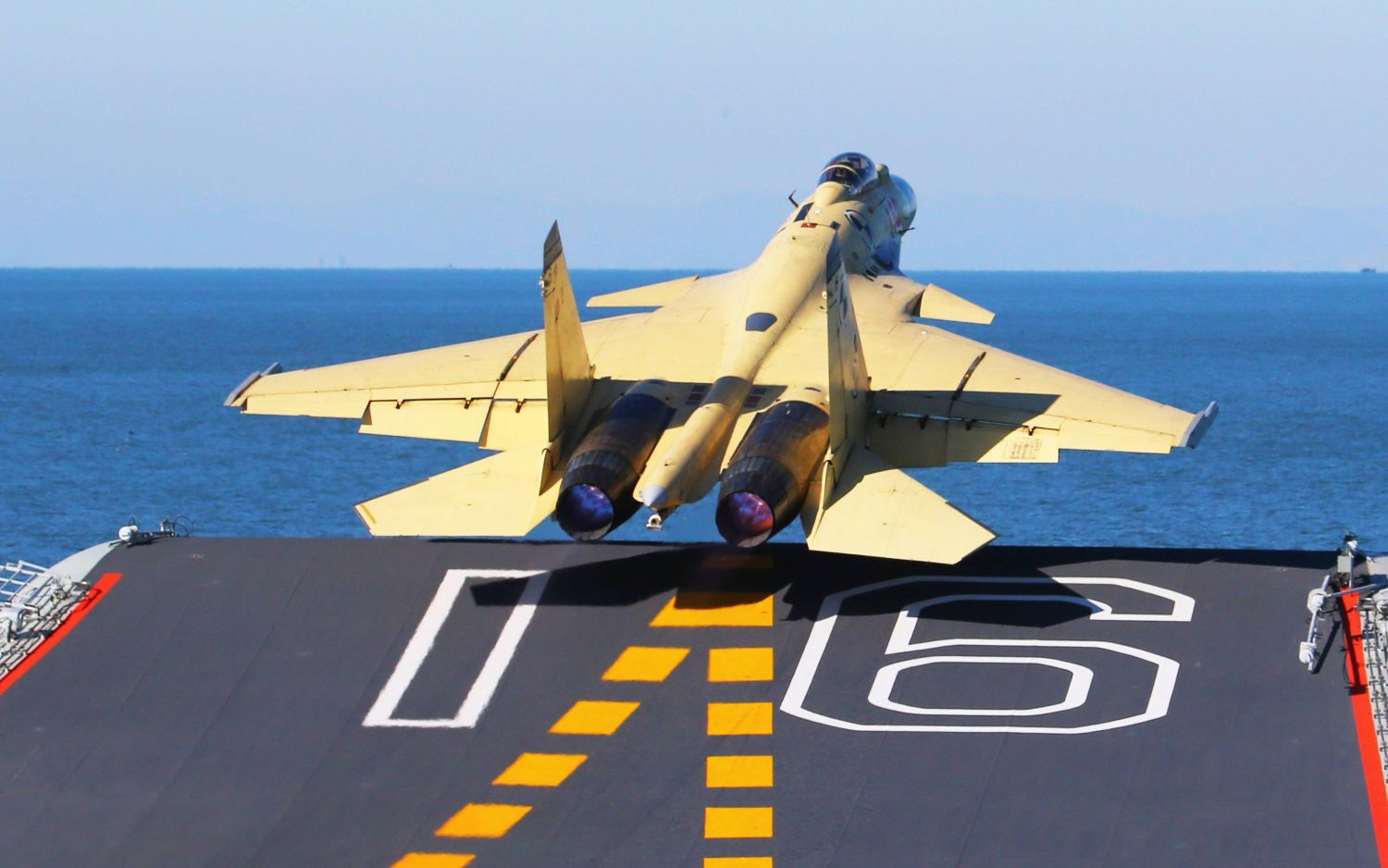
The J-15T distinguishes itself from its predecessors by its reinforced nose landing gear, which features a longer and wider shock-absorbing oleo strut designed to withstand the increased stress of catapult launches. It can be launched without relying on its thrust, thanks to the electromagnetic catapult system. This ability makes the J-15T a more capable and efficient option for the PLAN’s future carriers.
Notably, the J-15 is less advanced in stealth and sensor fusion, but it is cheaper to produce and better suited to China’s current carrier needs. According to Chinese experts, the J-15B and J-15T, equipped with advanced avionics, narrow the gap with modern US fighters.
However, despite its cutting-edge capabilities, the aircraft has remained mired in controversy for a long time.
Russian military analyst Vasily Kashin was earlier quoted as saying: “The Chinese decided to save money and, rather than purchasing several Su-33s from Russia for later license manufacture in China, they opted to buy a Su-33 prototype from Ukraine.”
“As a result, the J-15 took a longer time and more money than projected to develop, and the first planes were less reliable,” Kashin noted.
The J-15 is also the heaviest carrier-based fighter in service. The J-15 weighs 38,000 pounds at empty weight, almost 6,000 pounds more than the F/A-18E/F Super Hornet and 4,000 pounds more than the F-35C.
A Chinese Navy J-15 fighter jet crashed in March this year during a training exercise, with critics pointing to its obvious weaknesses. Some analysts called the jet a “White Elephant” for the PLA Navy.
Early J-15 models utilized Russian AL-31F engines, which were plagued by reliability issues. However, the outdated engines have now been replaced by the Chinese WS-10.
China’s troubles are compounded by a shortage of qualified naval aviators to operate its growing fleet of carrier-based aircraft, particularly the J-15 fighters.
A 2022 report estimated that the PLAN requires at least 200 qualified carrier-based fighter pilots to operate approximately 130 shipborne aircraft across its three carriers. However, it was allegedly struggling to meet this demand.
The J-15 series will remain China’s primary carrier fighter through the late 2020s, until the stealthier J-35 gradually supplements it.
How China Acquired Liaoning From Ukraine
China launched its first aircraft carrier, Liaoning, named after a Chinese province, in 2012. The vessel was a refurbished Soviet Kuznetsov-class cruiser carrier purchased in an incomplete state.
Due to its potent arsenal of 12 P-700 Granit anti-ship missile systems, Kuznetsov was technically classified as an “aircraft-carrying cruiser.” This technicality was crucial because the Montreux Convention forbade “aircraft carriers” weighing more than 15,000 tons from transiting the Bosporus Strait from the Black Sea to the Mediterranean.
The second ship in its class, the Varyag, was barely two-thirds finished in Ukraine before the fall of the Soviet Union because it lacked weapons and electrical equipment. When work on the project ended in 1992, the cash-strapped Ukrainian government tried everything in its power to sell the 55,000 tons of useless metal decaying in its Mykolaiv shipyard.
The PLA Navy desired the Varyag, and the team was dispatched by Beijing to inspect it and advised to buy it. However, the Chinese leadership was concerned that acquiring a carrier might exacerbate tensions as the country sought foreign investors and opened its economy significantly. The People’s Liberation Army hatched a plan to purchase without raising eyebrows in the West.
In 1996, a group of PLA officers led by intelligence chief Gen. Ji Shengde approached Xu Zengping, a former PLA basketball player who had turned into a successful businessman organizing international events. The strategy was to have Xu purchase the carrier under his name, presumably so that it might serve as a casino. This would eliminate any scope of suspicion on the PLA.
Xu traveled to Ukraine in January 1998 and met with the shipyard’s proprietors. He agreed to buy the carrier for $20 million after four days of negotiations during which massive bribes were offered. The payment was made almost a year later, with a $10 million late fee added to the negotiated amount.
The PLA had decided that the PLA Navy would later acquire and assemble the aircraft after the political environment had improved. A two-part news story revealed the plan by the Hong Kong-based South China Morning Post in 2015.
After years of dilly-dallying and several obstructions to its shipment to China, the carrier finally arrived at the port of Dalian in Liaoning province in March 2002.
It was placed in a dry dock three years later to enable a thorough refurbishment operation, which included sandblasting away all the rust and restoring and fitting the engines in 2011. The carrier was tailored to suit China’s requirements and was finally launched in 2012, and is now the mainstay of the PLA Navy.
Leave a Reply