TEHRAN – A national conference on the use of modern science and technology in salvage archaeology for major water and energy infrastructure projects was held in Tehran on Saturday.
The event, titled “Prospects for Applying Modern Sciences and Technologies in Salvage Archaeological Excavations of Water and Energy Infrastructure Projects,” took place at the headquarters of the Iran Water and Power Resources Development Company.
Several officials and experts addressed the opening session, including Mohammad Rahbari, advisor to the company’s CEO; Ebrahim Zarei, head of the Research Institute of Cultural Heritage and Tourism; Masoumeh Mosalla, head of the Iranian Center for Archaeological Research; and the conference’s scientific secretaries, Farzad Mafi and Mohammadreza Nemati.
Experts also discussed how new technologies are being used in salvage archaeology to protect cultural heritage at risk from large-scale development. A presentation by Fereidoun Biglari, head of the Paleolithic Department at the National Museum of Iran, and Sonia Shidrang, a faculty member at Shahid Beheshti University, reviewed recent work at the Darian Dam in Hawraman. They outlined surveys and excavations carried out in the Darian Dam reservoir area from late 2015 to the end of 2016. They also said more than 70 archaeological sites were identified, including caves, rock shelters, open-air sites, cemeteries, rock art, and fortifications, with material culture spanning from the Middle Paleolithic to the late Islamic periods. Five archaeological teams excavated 16 major sites before the reservoir was filled.
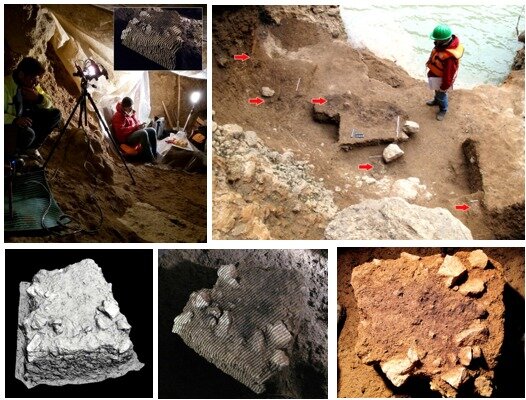
In addition, the conference highlighted the role of digital documentation in recording sites expected to be flooded, emphasizing the proper use of photogrammetry and laser scanning to create 3D models of vulnerable locations. One example was the Darai Rock Shelter, where a Middle Paleolithic hearth was recorded through laser scanning to preserve its spatial characteristics.
Experts also described engineering measures used to protect sites in situ. At the Kenacheh Cave, which contained deep stratified deposits from the Upper Paleolithic and Epipaleolithic periods, archaeologists installed a multilayer protective system of geotextile, sand, gravel, and gabions to shield the sediments from water pressure and erosion.
Creating national standards for digital documentation, establishing a unified database for salvage archaeology projects, and expanding training in digital and engineering preservation methods, were among the provisions explored during the conference.
In addition, the conference examined geophysical methods for salvage excavations, the potential use of artificial intelligence in archaeological analysis, and the application of remote sensing to identify ancient site boundaries. It concluded with a summary of presentations and the reading of the final statement.
AM
Leave a Reply