
by Haseeb A Drabu
Kashmir’s apple and craft sectors are trapped in costly inventory cycles. Strengthened warehousing, credit systems, and innovative financing can stabilise incomes, unlock capital, and protect the Valley’s economy from recurrent shocks.

The recent shock to Kashmir’s horticulture sector has once again exposed the fragility of the Valley’s economy. Within a matter of weeks, a crisis of both supply chain and sentiment pushed the Rs 20,000 crore apple industry into distress. With nearly 700,000 families, most of whom are small growers, depending on the apple trade for their annual income, the setback has been severe. While demands for government compensation were raised almost immediately, they have not translated into any substantial intervention. What the crisis does instead is highlight, with uncomfortable clarity, the need for deeper economic reform.
Kashmir’s economy has long suffered from the absence of reliable infrastructural intermediation, which ensures the unhindered movement of goods and reduces exposure to uncertain market conditions. Kashmir needs dependable connectivity and accredited storage, but alongside this, it requires something more fundamental: a stronger layer of financial intermediation. It is this financial backbone that can enable the smooth flow of goods, capital, and information, stabilising incomes and raising productivity across the value chain. Without it, even improved physical infrastructure cannot deliver the expected gains.
The immediate effect of disrupted connectivity in Kashmir is the rapid piling up of inventories, especially in two key export-oriented sectors, horticulture and crafts. While inventory build-up is inconvenient for crafts, it is catastrophic for horticulture, given the perishability of produce and the narrow window for sale. Kashmir’s high inventory-to-GDP ratio has long been recognised as a structural weakness. High inventories increase the cost of doing business, and when combined with high interest rates, they erode profit margins, reduce competitiveness, and discourage investment. This has constrained the growth potential of the Rs 2,50,000 crore Jammu and Kashmir economy.
The Apple Cart
Over the past decade and a half, the physical infrastructure supporting horticulture, particularly cold storage, has improved considerably. The Valley now has Controlled Atmosphere storage capacity of roughly 3.5 lakh metric tonnes. Yet financing infrastructure has lagged. Except for early greenfield financing initiated in 2007, little has been added to support the sector’s financial needs. Cold storage alone cannot stabilise the industry; it must be matched by integrated financial instruments that monetise inventories and provide liquidity. Only then will growers be able to withstand price fluctuations, market delays, and climatic stress.

It is in this context that the Jammu and Kashmir Bank’s recent introduction of warehousing receipt financing marks a potentially transformative shift. Electronic Negotiable Warehouse Receipts, already a trusted system in other parts of India, offer growers the ability to store their produce in certified warehouses and receive receipts that can be used as collateral for loans. Instead of distress-selling apples during oversupplied weeks, farmers can access immediate liquidity and wait for better market prices. This breaks the long-standing dependence on middlemen, whose buyer-financer nexus has often forced growers to settle for unremunerative prices.
Even if interest rates are initially higher, competition will eventually bring them in line with national benchmarks. For a sector where prices recently dropped to Rs 750 to Rs 1,000 per carton against 2024’s Rs 1,300 to Rs 1,400, such financial cushioning can significantly reduce vulnerability. However, the warehouse receipt system will require a strong legal and regulatory foundation. Legislation recognising these receipts as negotiable instruments and their enforceability as collateral is essential. The National Warehousing Development and Regulation Act of 2007 provide a ready template, and establishing an empowered regulatory authority would ensure standardisation, accreditation, security, and dispute-free trading.
Once fully institutionalised, these reforms will bring long-term changes. They will formalise the apple trade, ensure standardised grading and quality reporting, facilitate integration with commodity exchanges, and make crop insurance more efficient and affordable. Accredited cold stores with proper audits, enhanced logistics, and real-time price information will reduce post-harvest losses and increase farmer resilience. By 2023, warehouse receipt financing nationwide had already facilitated loans of Rs 4,000 crore; with proper uptake, Kashmir’s growers can unlock similar value, stabilising incomes even in years affected by low yields or moisture deficits.
The Craft Bogey
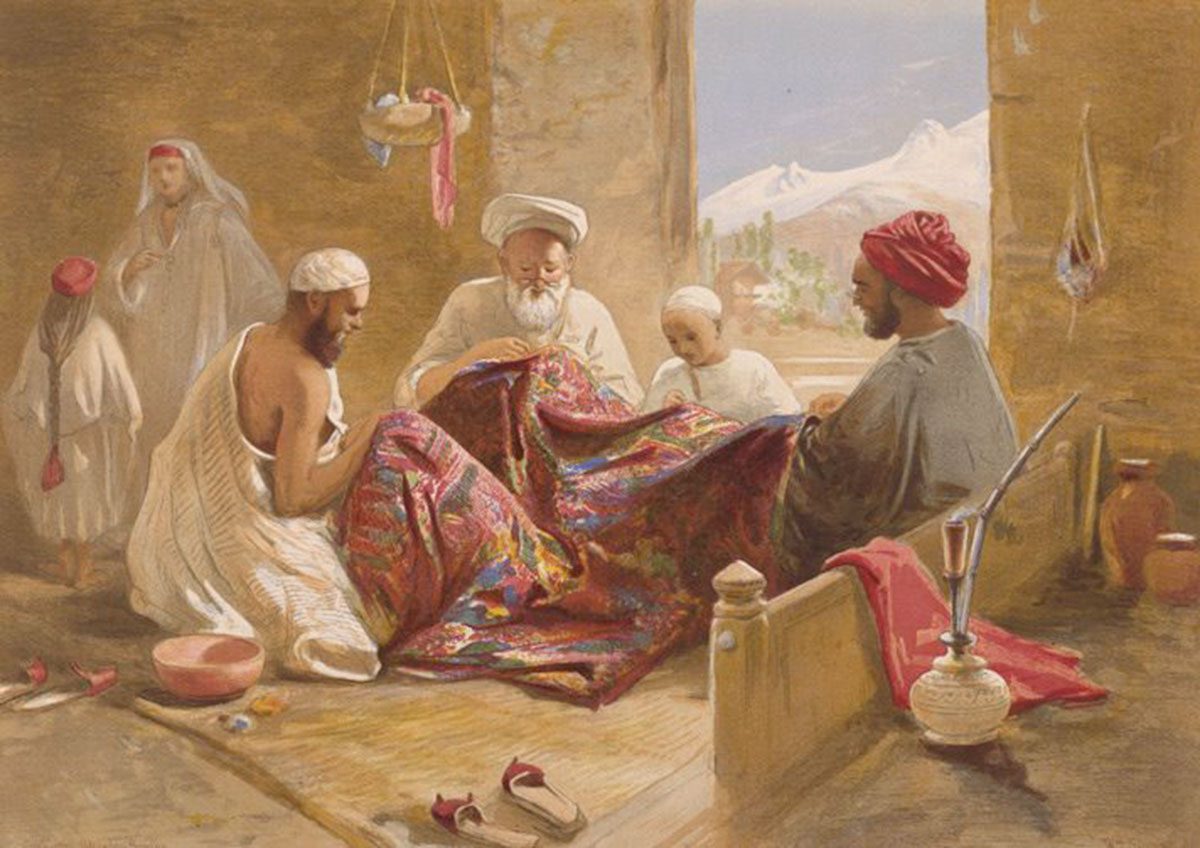
The logic of inventory monetisation extends beyond horticulture. Kashmir’s artisanal craft economy, characterised by small workshops, specialised skills, and seasonal markets, also carries extraordinarily high levels of finished goods inventory.
In crafts, large inventories are not a result of inefficiency but a built-in feature of the production process. Yet these inventories immobilise capital and limit growth. Globally, handicraft economies often have forty to sixty per cent of their capital tied up in unsold goods. In Kashmir, anecdotal estimates suggest an inventory-to-income ratio of fifteen to twenty-five per cent, far above global average levels.
Recent data illustrate the challenge. In 2023-24, handicrafts achieved impressive sales of Rs 1,394 crore, mostly through exports. Yet production that year was Rs 2,370 crore, nearly double the sales, leading to a carry-over inventory of about Rs 400 crore. In 2024-25, the slump in global demand reduced sales to Rs 880 crore, while production remained unchanged. Inventories consequently spiked to Rs 1,500 crore, pushing the inventory-to-sales ratio above one hundred per cent. Such distortions show why liquidity solutions are urgently required.
Around the world, fintech-enabled, inventory-based microcredit models have helped craft economies break free from this constraint. Platforms such as Kiva and the Artisan Alliance have enabled peer-to-peer lending, releasing up to half of locked capital in several craft clusters. Revenue-based financing, where repayments rise and fall with the business’s earnings, has emerged as a particularly effective model, protecting small producers from rigid instalment cycles. Projections suggest that this form of financing could unlock ten to twenty billion dollars for global creative sectors by 2030.
For Kashmir, an Artisan Fund backed by the global Kashmiri diaspora could become a powerful instrument for rejuvenating the sector. Such a fund would invest in artisans, strengthen sustainable livelihoods, support women’s work, preserve heritage skills, and create a modern financial architecture suited to the Valley’s artisanal strengths.

Both horticulture and crafts lie at the heart of Kashmir’s economy. Both suffer from excessive inventories, liquidity stress, and the absence of modern intermediation. And in both, the path to resilience lies not only in improving physical infrastructure but in creating robust financial systems that monetise stock, release capital, and allow producers to grow without fear of the next crisis.
(An economist, the author was Jammu and Kashmir State’s last finance minister.)
Leave a Reply