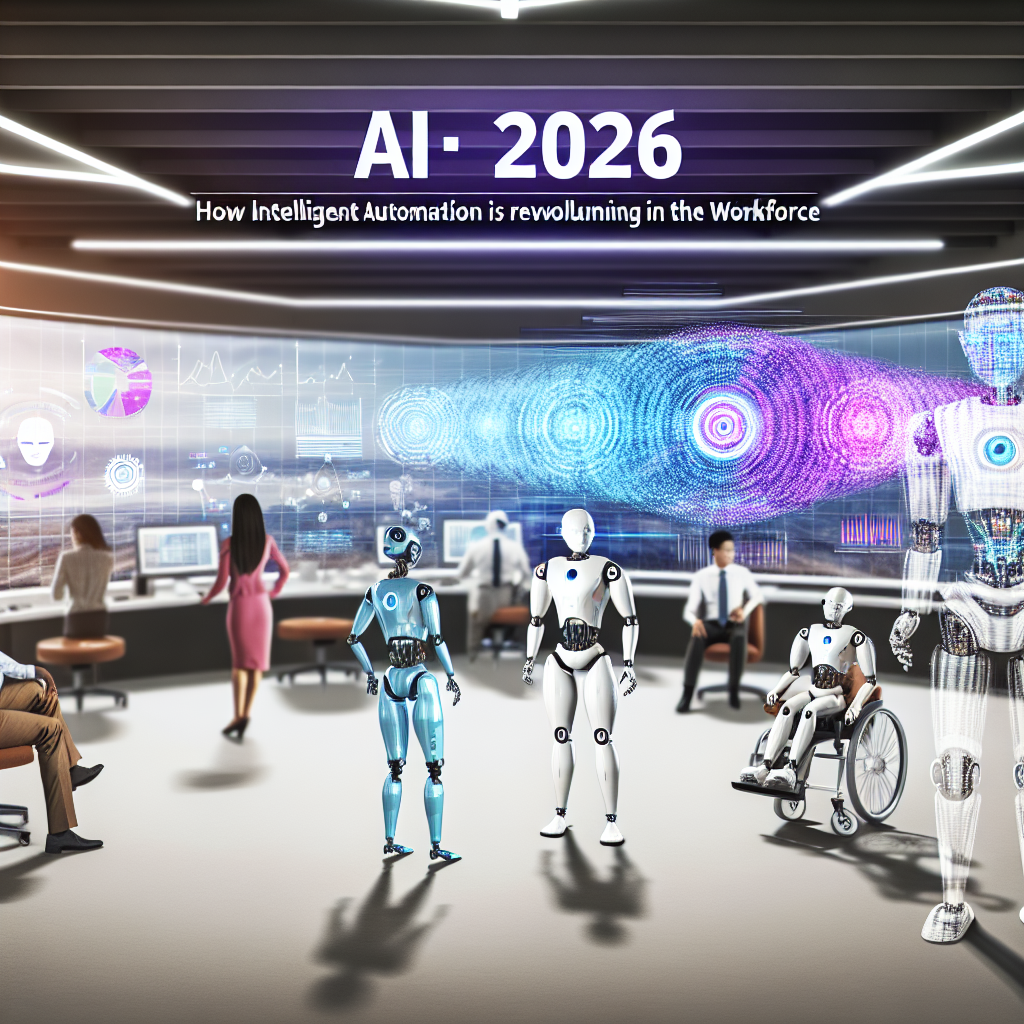
The landscape of work is undergoing a fundamental shift as we approach 2026, with Intelligent Automation (IA) at the forefront of this transformation. From manufacturing to finance, sectors across the globe are leveraging AI technologies to enhance productivity, drive innovation, and foster a new era of collaboration between humans and machines.
The Rise of Intelligent Automation
Intelligent Automation refers to the combination of AI with automation technologies. This synergy allows organizations to automate complex processes that once required human intervention.
Key Technologies Driving IA
- Machine Learning: Algorithms that learn from data and improve over time, allowing computers to make decisions without explicit programming.
- Robotic Process Automation (RPA): Software robots that imitate repetitive tasks, enabling employees to focus on higher-value activities.
- Natural Language Processing (NLP): Allowing machines to understand and respond to human language, enhancing customer experiences.
- Computer Vision: Enabling machines to interpret and make decisions based on visual data, crucial for industries like manufacturing and healthcare.
Benefits of Intelligent Automation
The integration of IA in the workplace has enormous benefits, including:
- Increased Efficiency: Automated systems can perform tasks faster than humans, leading to improved operational speed.
- Cost Reduction: By automating routine tasks, companies can significantly reduce operational costs.
- Enhanced Accuracy: Machines are less prone to errors compared to humans, improving the quality of outputs.
- Scalability: Businesses can scale operations rapidly without the need for a proportional increase in workforce.
Impact on Employment
While there are concerns about job displacement, the reality is more nuanced. Intelligent Automation is expected to create new job categories focused on managing and maintaining these technologies. The key is to reskill and upskill the workforce to work alongside automation tools.
New Opportunities
- Data Analysts: As businesses generate more data, there’s a growing need for professionals who can interpret and leverage that data.
- AI Specialists: The demand for AI developers, data scientists, and machine learning engineers is skyrocketing.
- Automation Managers: Overseeing automation implementations and ensuring they align with business goals is becoming critical.
Future Outlook for 2026
Looking toward 2026, the landscape will be dominated by further advancements in AI, making it imperative for organizations to embrace and adapt to these changes. Companies that leverage Intelligent Automation effectively will not only thrive but set new standards for operational excellence.
Final Thoughts
Intelligent Automation is reshaping the very nature of work. By embracing this revolution, businesses can pave the way for a more efficient, innovative, and collaborative future, thus transforming the workplace for the better.
Leave a Reply