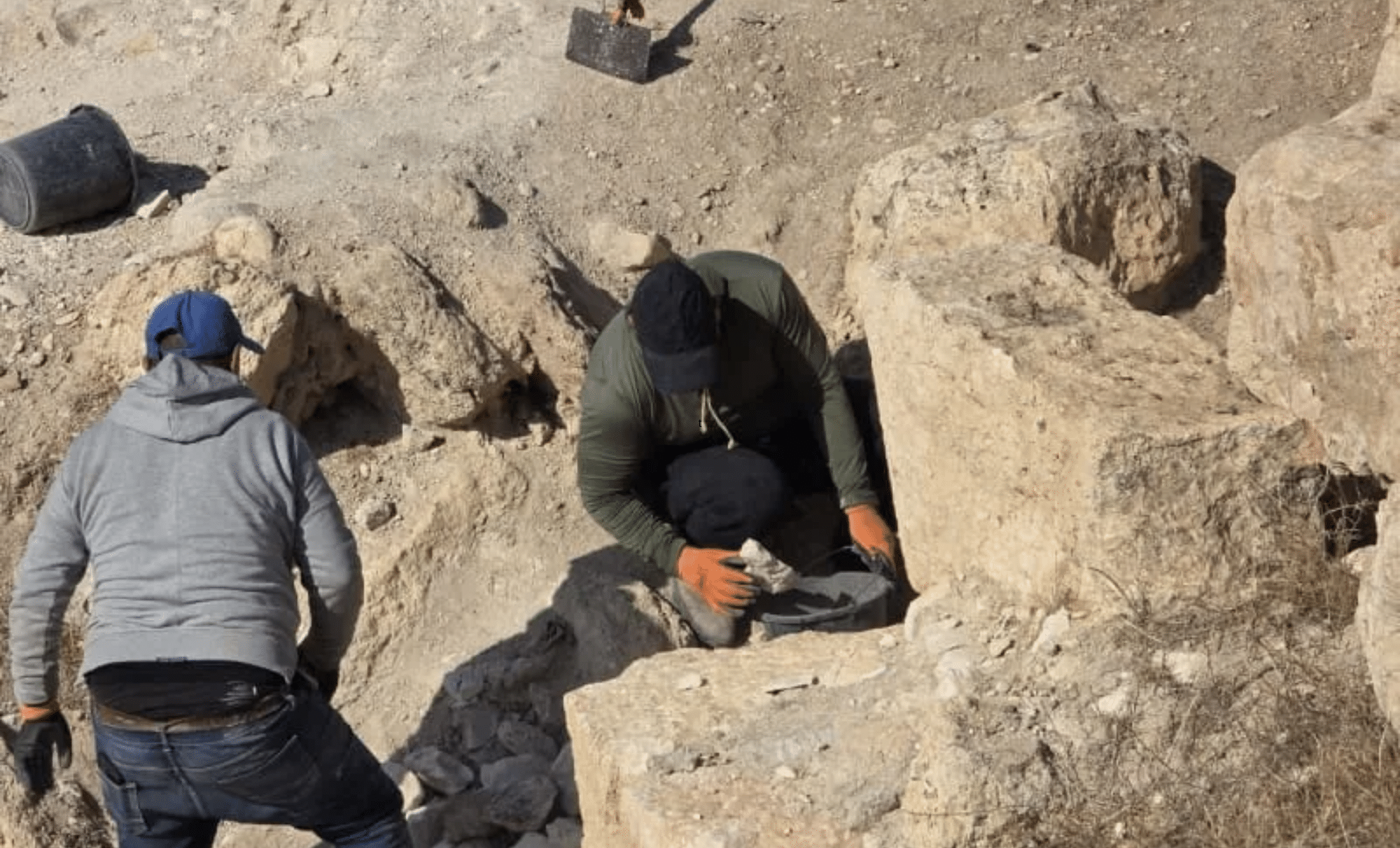
In a groundbreaking discovery, Israeli archaeologists have unearthed the remains of a royal palace atop the ancient Alexandrium fortress, a mountaintop site rising 650 meters above the Jordan Valley. This excavation, led by Dr. Dvir Raviv of Bar-Ilan University, reveals a more complex and extensive royal structure than previously understood, offering fresh insights into the historical significance of the site.
The Discovery at Alexandrium: Unveiling a Lost Royal Complex
Archaeologists working at the Alexandrium fortress, a site with deep historical roots, have recently made a significant discovery. The remains of a royal palace on the northwestern slope of the fortress suggest that the site was far more than just a military stronghold. The fortress, perched high above the Jordan Valley, was initially built by Hasmonean King Alexander Yannai and later renovated by Herod the Great. Josephus, the famous Jewish historian, described the site as a “fortress built in great splendor on a high mountain,” but many details about its full architectural and functional scope remained shrouded in mystery.
Dr. Dvir Raviv, the director of the ongoing excavation, emphasized the importance of these new findings.
“It sheds light on the architectural style and the function of the site, which is not mentioned by Josephus, our only historical source for the period,” Raviv explained in an interview with The Press Service of Israel (TPS-IL).
This discovery not only brings clarity to the physical structure of the site but also to its potential role in the broader historical context of ancient Judea. The presence of monumental Herodian-style columns among the remains reinforces the idea that the fortress served a royal function during its prime.
Alexandrium: A Fortress of Intrigue and Power
The Alexandrium fortress is not just another archaeological site—it was a key player in the power struggles of the Hasmonean dynasty and the rise of Herod. After being built by King Yannai, it served as a stronghold during tumultuous periods of Jewish history. Under Herod’s renovation, it became more than just a fortress. The newly uncovered remains suggest the existence of a royal palace, emphasizing that the fortress was likely part of a far larger, more extensive royal complex. This architectural complexity challenges previous assumptions about the site’s role and scale, indicating that Alexandrium may have been central to political and military operations in the region.
The site also holds critical insights into the military and social dynamics of the time. As one of the few remaining Hasmonean fortresses, Alexandrium was a key location during the Jewish revolts against the Roman Empire. According to historical sources, the site was eventually destroyed by the Romans in 57 BCE, a pivotal moment in the struggle between the Roman Empire and the Jewish people. Understanding the full scope of the fortress and its royal elements allows researchers to better contextualize the political importance of Alexandrium in its time.

Reconstructing the Past: What the New Findings Reveal
The newly discovered architectural fragments provide important clues about the royal palace and its functions. Among the finds are two column drums, 40 centimeters in diameter and 60 centimeters tall, which match the monumental Herodian style common in other royal sites of the era, such as Masada. This discovery is important because it aligns with other known Herodian architecture, which was used to symbolize power and grandeur. These columns, along with other fragments, help reconstruct parts of the layout of the palace, allowing archaeologists to gain a deeper understanding of its royal significance.
The renewed excavation at Alexandrium is not only important for what it has uncovered but also for what it may still reveal. “We hope to uncover more,” Dr. Raviv stated. The excavation, supported by the Ministry of Heritage, has been ongoing since March, marking the first systematic work at the site in over 40 years. Archaeologists are optimistic that more significant discoveries are on the horizon, which will continue to shed light on the historical and cultural importance of Alexandrium.
Leave a Reply